If you’re planning to invest in RV storage or develop a storage facility, one of the most important questions you’ll face is simple but critical: how many rv storage spots per acre can you actually fit?
The answer directly impacts your revenue potential, layout efficiency, and long-term profitability. But unlike standard parking calculations, RV storage requires thoughtful planning, accounting for vehicle size, maneuvering space, zoning rules, and customer convenience.
In this complete guide, you’ll learn exactly how to calculate RV storage density, what affects capacity, and how to design a layout that balances maximum occupancy with usability.
How many rv storage spots per acre? (Quick Answer)
On average, you can fit 35 to 75 RV storage spots per acre, depending on layout design, unit size, and drive aisle width.
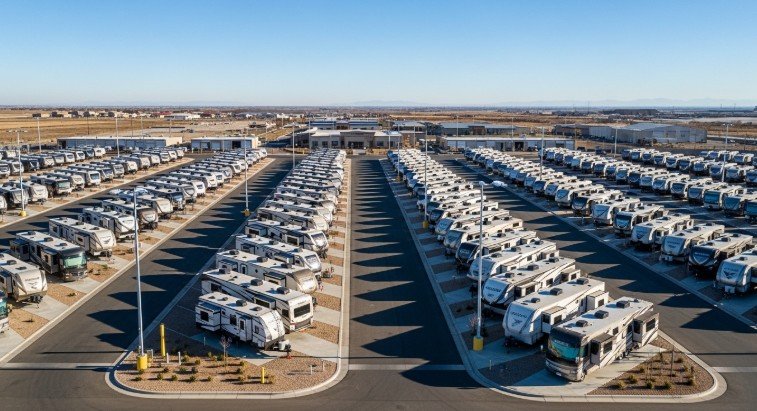
- High-density layouts: 60–75 spaces per acre
- Standard layouts: 45–60 spaces per acre
- Low-density / premium layouts: 35–45 spaces per acre
Efficient designs with smaller units and tighter spacing increase capacity, while wider aisles and premium features reduce the total number of spaces.
Understanding how many rv storage spots per acre
The number of RV storage spaces per acre is influenced by more than just land size. It’s a combination of engineering, design efficiency, and operational planning, an approach emphasized by brands like Privacy RV, which focus on maximizing both space utilization and user-friendly layout design for long-term efficiency.
Unlike traditional parking lots, RV storage facilities must accommodate:
- Large vehicle turning radiuses
- Wide drive aisles for safe navigation
- Setbacks required by zoning laws
- Space for drainage, landscaping, and infrastructure
Key factors that affect RV storage density
- RV space size: Commonly 12’x40’, 12’x45’, or 12’x50’
- Drive aisle width: Typically 24–40 feet
- Layout configuration: Single-loaded vs double-loaded
- Zoning and setbacks: Local regulations vary
- Facility features: Offices, gates, covered parking
A well-designed facility is not just about fitting the most units, it’s about creating a functional, accessible, and scalable layout.
How Many RV Storage Spots Per Acre? (Density Breakdown by Layout Type)
Different layout strategies produce very different results:
- High-density layout (tight spacing):
60–75 spots per acre
Best for budget-focused facilities - Standard layout (balanced):
45–60 spots per acre
Most common and practical - Low-density layout (premium spacing):
35–45 spots per acre
Ideal for luxury RV storage with easier access
Your choice depends on your target customer and pricing strategy.
What People Also Ask About RV Storage Density
- How much space does one RV storage unit require?
- What is the ideal RV storage layout design?
- How wide should drive aisles be?
- Is covered RV storage less dense?
- How profitable is RV storage per acre?
These questions all relate to one goal: maximizing usable space without sacrificing usability.
Calculating how many rv storage spots per acre
Step 1: Understand Total Land Area
One acre equals 43,560 square feet, but not all of it is usable.
You must subtract:
- Setbacks
- Landscaping
- Office or utility areas
Usable land is typically 70–85%.
Step 2: Define Average RV Space Size
Common dimensions include:
- 12’ x 40’ = 480 sq ft
- 12’ x 45’ = 540 sq ft
- 12’ x 50’ = 600 sq ft
Larger spaces reduce total unit count but attract higher-paying customers.
Step 3: Account for Drive Aisles
Drive aisles consume a significant portion of space:
- Standard: 24–30 feet
- Premium: 30–40 feet
Wider aisles improve accessibility but lower density.
Step 4: Choose Layout Type
- Single-loaded layout: Units on one side → lower density
- Double-loaded layout: Units on both sides → higher efficiency
Double-loaded designs are typically the best choice for maximizing space.
Step 5: Calculate Net Usable Area
Example calculation:
- 43,560 sq ft × 80% usable = ~34,800 sq ft
Step 6: Apply Space + Circulation Factor
Each unit requires more than just its footprint.
Effective space per unit:
- 700–1,000 sq ft (including aisles)
Estimated result:
- 35 to 60 units per acre
Step 7: Adjust for Facility Features
Additional features reduce total capacity:
- Security gates
- Office buildings
- Covered parking structures
- Wash stations or dump areas
These features may reduce density but increase value and pricing potential.
RV Storage Density by Facility Type
| Facility Type | Avg Space Size | Spots per Acre | Advantages | Limitations |
|---|---|---|---|---|
| Open Storage (High Density) | 12’x40’ | 60–75 | Maximum revenue potential | Tight maneuvering |
| Standard Outdoor Storage | 12’x45’ | 45–60 | Balanced usability and density | متوسط efficiency |
| Premium Wide-Aisle Storage | 12’x50’ | 35–45 | Easier access for large RVs | Lower capacity |
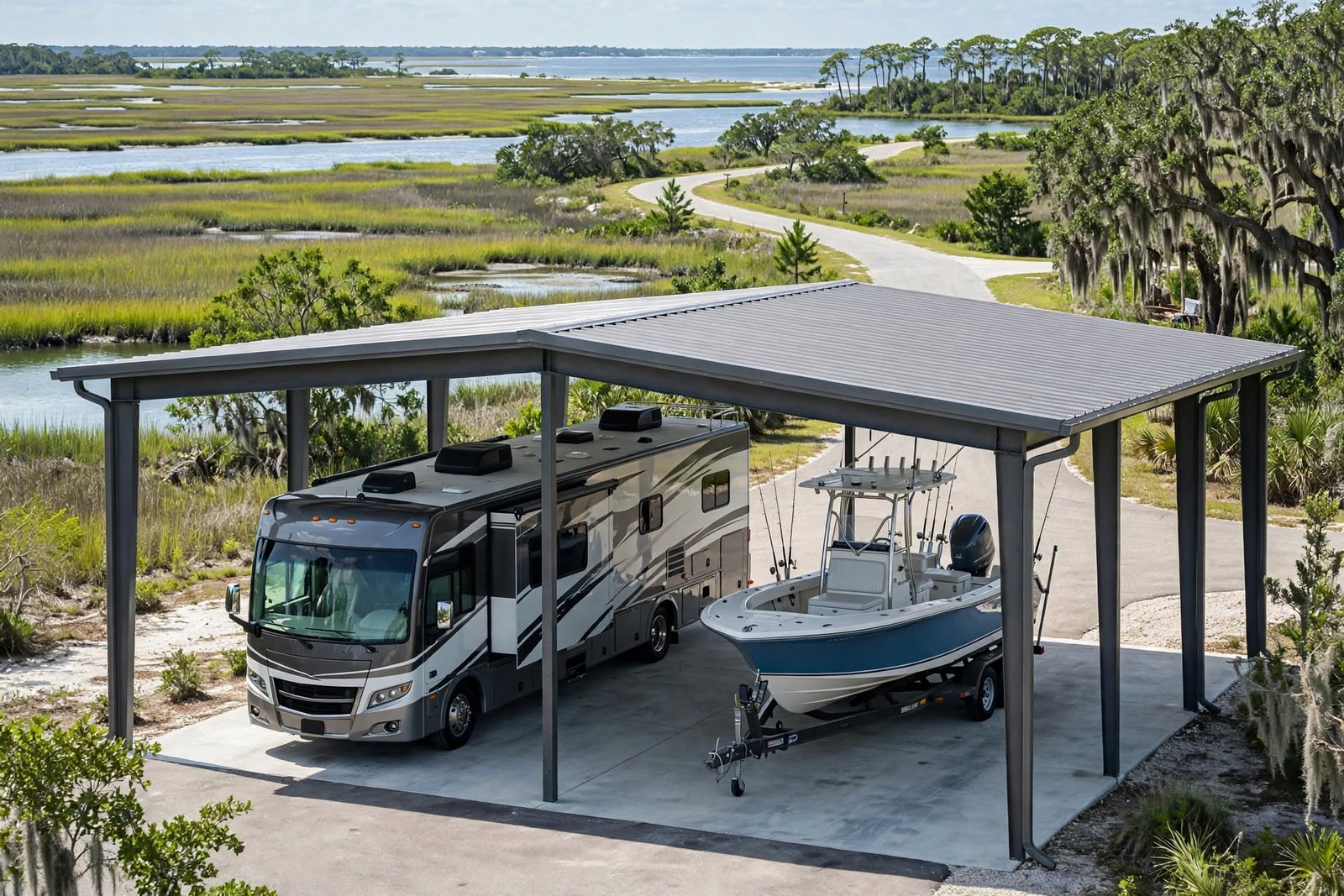
| Covered RV Storage | Larger structures | 25–40 | Higher rental pricing | Higher cost |
| Enclosed Storage Units | Garage-style | 20–35 | Premium offering | Lowest density |
Common Mistakes to Avoid
Many developers overestimate capacity due to these mistakes:
- Ignoring drive aisle requirements
- Overestimating usable land
- Skipping zoning and setback calculations
- Choosing inefficient layouts
- Forgetting space for amenities
These errors can lead to poor design and reduced profitability.
Pro Tips for Maximizing RV Storage Density
To optimize your facility:
- Use double-loaded layouts wherever possible
- Keep aisles wide enough for safety but not excessive
- Offer a mix of unit sizes to attract more customers
- Design for smooth traffic flow and turning radius
- Plan for future expansion from the start
Efficiency comes from smart design, not just tighter spacing.
FAQs
How many rv storage spots per acre on average?
Most facilities fit between 35 and 75 spaces per acre, depending on layout and design.
What size is a standard RV storage space?
Common sizes are 12’x40’, 12’x45’, and 12’x50’.
How much land is usable on one acre?
Typically 70–85% after accounting for infrastructure and setbacks.
Does covered RV storage reduce capacity?
Yes, but it allows you to charge higher rental rates.
What is the best layout for maximum density?
Double-loaded layouts with optimized aisle widths provide the highest efficiency.
How wide should RV storage drive aisles be?
Usually 24–40 feet, depending on RV size and facility type.
Is RV storage profitable per acre?
Yes, especially with high occupancy and efficient design.
Can zoning laws affect RV storage density?
Absolutely, local regulations can significantly limit layout and capacity.
Conclusion
Understanding how many rv storage spots per acre is essential for building a profitable and functional RV storage facility. While the general range falls between 35 and 75 units per acre, the final number depends on layout design, unit size, and infrastructure planning.
The most successful facilities don’t just maximize space, they optimize it. By balancing density, accessibility, and customer experience, you can create a storage operation that delivers both high occupancy and long-term profitability.
With the right planning and smart design decisions, your RV storage facility can become a highly efficient, scalable, and profitable investment.