What Makes an RV Campground Stand Out
RV camping has grown in popularity as travelers seek flexibility without sacrificing comfort. The campground you choose affects every aspect of your stay, from how well you sleep to how much you enjoy the surrounding area. Knowing what to look for helps you avoid disappointment and find properties that match your expectations.
This guide covers the four factors that matter most when selecting an RV campground: hookups, space, privacy, and location. Getting these right means the difference between a stay you forget and one you repeat.
Hookups: Power, Water, & Sewer Connections
Electrical Service
RV parks offer electrical connections at 20, 30, or 50 amps. Smaller travel trailers and pop-ups typically run on 30 amp service, while larger Class A motorhomes and fifth wheels need 50 amp to power air conditioners, appliances, and electronics simultaneously. Booking a 30 amp site for a 50 amp rig means running fewer systems at once or using adapters that limit your capacity.
Ask about electrical reliability before booking. Older parks with outdated infrastructure may experience voltage drops during peak usage hours. Low voltage can damage sensitive electronics and reduce appliance performance.
Water Hookups
Full hookup sites include water connections that let you use onboard plumbing without draining your fresh tank. Check the water quality and pressure at parks you consider. Some campgrounds draw from wells with high mineral content that affects taste. A water pressure regulator protects your RV plumbing from spikes that can damage hoses and fixtures.
Sewer Connections
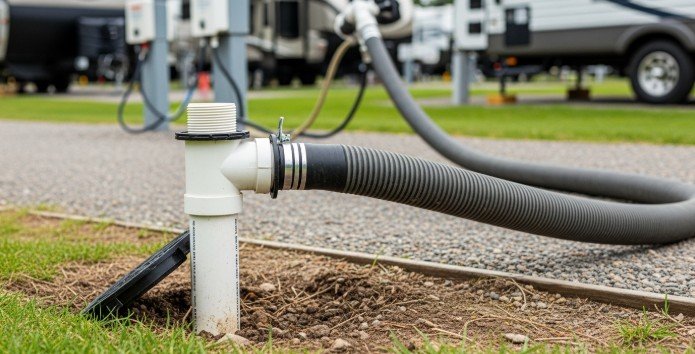
Full hookups include sewer access at your site, eliminating trips to the dump station. Parks without sewer hookups require you to manage holding tanks and schedule dump times. For longer stays, sewer connections make daily life considerably more convenient.
Space: Site Dimensions & Maneuvering Room
Site Length & Width
RV lengths vary from 20-foot travel trailers to 45-foot Class A coaches. Before booking, confirm that your rig plus tow vehicle will fit the assigned site. Some parks list site dimensions online, while others require a phone call. Arriving at a site too small for your setup creates stress and may require moving to a different spot if one is available.
Pull-Through vs. Back-In Sites
Pull-through sites allow you to drive in and drive out without reversing. These work well for longer rigs, trailers, and drivers less comfortable backing into tight spots. Back-in sites typically cost less and sometimes offer better views or locations within the park. Consider your skill level and rig length when choosing between options.
Slide-Out Clearance
Many RVs have slide-outs that extend living space by several feet on each side. Narrow sites with trees, posts, or neighboring rigs close by may prevent full extension. Ask about clearance when booking, especially at older parks designed before slide-outs became standard.
Privacy: Buffer Zones & Site Layout
Spacing Between Sites
Campground density varies widely. Resort-style parks may pack 100 or more sites per acre with minimal separation. Smaller properties sometimes spread a dozen sites across several acres with trees or vegetation between neighbors. Consider what level of separation matters to you and ask specific questions about layout.
Natural Barriers
Trees, shrubs, and terrain features create buffers that reduce noise and visual intrusion. Sites carved from open fields offer little separation even with generous spacing. Wooded properties feel more private even when sites sit relatively close together. Photos on campground websites can reveal layout details.
Site Placement Within the Park
End sites, corner lots, and perimeter positions typically offer more privacy than interior spots surrounded by neighbors on all sides. Waterfront sites sometimes back up to shoreline rather than other RVs. Request specific site numbers when possible to control your placement.
Location: Access to Activities & Amenities
Proximity to Water
Campers who fish, kayak, or swim benefit from parks near rivers, lakes, or coastline. Some properties include boat ramps, docks, or beach access on-site. Others sit within a short drive of public launches. Calculate if convenience matters enough to pay higher rates at waterfront locations.
Distance to Marinas & Services
Fishing destinations require access to bait, ice, fuel, and sometimes guide services. Parks within walking distance of marinas save time and eliminate the need to tow boats on roads. If marina access matters for your trip, verify distances before committing to a site.
Town Access & Supplies
Remote campgrounds offer peace but may require long drives for groceries, fuel, and supplies. Stock up before arriving at isolated locations. Parks near towns provide easier access but sometimes experience more traffic and noise.
Amenities That Add Value
Beyond the essentials, campgrounds offer varying amenities. Laundry facilities matter for longer stays. Wi-Fi quality ranges from usable to frustrating. Pools, hot tubs, and clubhouses appeal to families and social campers. Boat storage accommodates anglers who tow their vessels.
Prioritize the amenities that match your camping style. Paying for a pool you never use wastes money, while lacking laundry on a two-week trip creates inconvenience.
Questions to Ask Before Booking
Call campgrounds directly to get accurate information. Ask about site dimensions, hookup types, Wi-Fi reliability, and pet policies. Inquire about noise levels, especially if booking near highways, event areas, or late-night activity zones. Request photos of specific sites if the website lacks detail.
Reviews from other RVers provide useful context, but experiences vary. One camper’s complaint about spacing may not matter to someone who prioritizes location over privacy.
Booking & Reservation Tips
Peak seasons fill up fast at popular campgrounds. Book months in advance for holiday weekends and seasonal events. Shoulder seasons offer better availability and sometimes lower rates. Cancellation policies vary, so read terms before committing deposits.
Finding the right RV campground takes research, but the effort pays off. A site with the hookups you need, room for your rig, privacy from neighbors, and access to activities you enjoy makes every trip worthwhile.