Florida’s Nature Coast is one of the better stretches of the state for watching birds, and Steinhatchee sits right in the middle of it. Salt marshes, river mouths, and shallow flats draw wading birds, raptors, and shorebirds all year, and the migration seasons bring even more. If you are booking a campground in Steinhatchee and you like to keep a pair of binoculars handy, here is what you can expect to see and where to look for it.
Why the Nature Coast Is a Birding Spot
The Nature Coast has miles of undeveloped marsh, tidal creeks, and pine flatwoods, which give birds food and cover that busier coasts have lost. The mix of fresh water, salt marsh, and Gulf shoreline packs a lot of habitat into a small area, so you can see wading birds, raptors, and songbirds within a short drive. Because the region stays quiet, the birds are less disturbed than in crowded parts of the state, and you often have a marsh or a trail to yourself.
Birds You Will See Around Steinhatchee
Some birds are around all year, and you will spot them on almost any trip once you know where to look.
Osprey
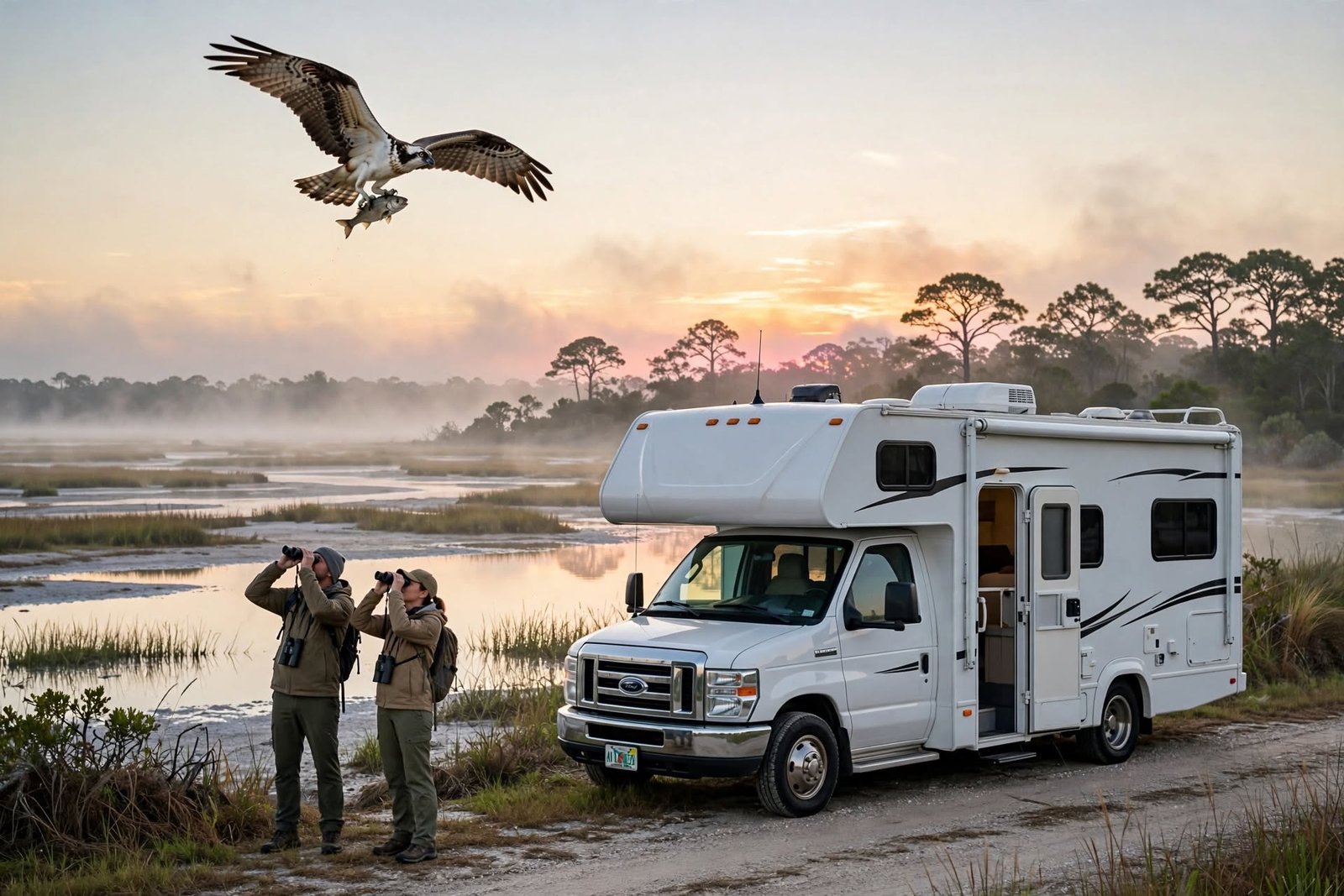
Ospreys are one of the easiest birds to find here, since they hunt fish over the river and the flats. You will see them hover, then drop feet first to grab a fish, and you will find their big stick nests on channel markers, poles, and dead trees near the water. They stay active through the warmer months and put on a show for anyone watching the shoreline.
Wood Storks
Wood storks wade the shallow marshes and flooded flats, sweeping their bills through the water to feel for food. They are large birds with bare heads, and they often feed in small groups where the water is dropping and fish are trapped in the shallows. Seeing a group of them work a marsh is one of the treats of birding on this coast.
Herons, Egrets, & Ibis
The marshes hold plenty of wading birds beyond the storks. Great blue herons, great egrets, snowy egrets, tricolored herons, and white ibis all feed along the creeks and flats. Roseate spoonbills turn up in some spots as well, and their pink color makes them easy to pick out. These birds are around all year, so you rarely come up empty on a marsh walk.
Migratory Species by Season
The bird list changes as the seasons turn, which is part of what makes the area worth repeat visits. In spring and fall, migrating songbirds move through the pine flatwoods and hammocks, including warblers, vireos, and buntings. Summer brings swallow-tailed kites, which soar over the trees with their forked tails on full display. Winter fills the marshes and open water with ducks and other waterfowl, along with sparrows in the grasses. Shorebirds work the flats and mud during their own migrations, so the mix on any given trip depends on the time of year.
Where to Watch Birds Near Steinhatchee
Several spots within a short drive give you good access to the marshes and flats. The Big Bend Wildlife Management Area covers a large stretch of coast near Steinhatchee, with units that offer roads, dikes, and trails for watching wading birds and raptors. Hagens Cove, north toward Keaton Beach, has an observation tower and shallow water that draws waders and shorebirds. The Steinhatchee Falls area upriver puts you in hardwood country where songbirds move through in migration. Even a slow paddle up a tidal creek from the river puts you next to herons, egrets, and osprey without much effort.
Gear for a Day of Birding
You do not need much to enjoy the birds, but a few items help. A pair of binoculars is the main tool, and a spotting scope helps for distant birds on the open flats. A field guide or a bird app helps you sort out the wading birds, which can look alike at a glance. Bring bug spray, since the marshes hold plenty of mosquitoes and biting flies, and wear light long sleeves for the same reason. Water, a hat, and sun protection round out the kit for a morning in the open.
Timing Your Birding Trips
Birds are most active early in the morning and again near dusk, so plan your outings around those windows. A falling tide concentrates wading birds on the flats as fish and shrimp get trapped in the shallows, which makes it a good time to watch. The cooler months bring the most birds overall, since the migrants and winter residents add to the year round crowd, and the bugs are lighter too. Check the tide and the weather before you head out, and give yourself a quiet couple of hours to let the birds settle around you.
Birding From Your Campground Base
Staying in the area lets you catch the early morning and evening hours without a long drive, which is when the birding is best. Keep your binoculars and bug spray by the door so you can head out at first light. Many campers find they can watch ospreys, herons, and egrets right from the water’s edge near their site, then drive to a marsh or a tower for a fuller morning. With the marshes, the river, and the flats all close together, Steinhatchee rewards anyone who takes the time to look, and the bird list only grows the more trips you make.