Most boat owners never think about boat trailer width until it becomes a problem. Maybe you struggle squeezing through a tight driveway, feel nervous towing on narrow highways, or get stuck at a marina because your trailer simply won’t fit through the ramp lane. Trailer width affects everything from towing safety to legal compliance, yet it’s one of the most overlooked measurements in boating.
So, how wide is a boat trailer really? And what width is safe or legal to tow on U.S. roads?
In this guide, we break down standard trailer widths, legal limits, how to measure your trailer correctly, and how to choose the right width for your boat and vehicle. By the end, you’ll know exactly what to look for and how to avoid fines, towing hazards, or property damage.
Standard Boat Trailer Widths
The width of a boat trailer varies depending on the size and type of boat it’s designed to carry. Below is the quick breakdown most owners need:
| Boat Size | Average Trailer Width |
|---|---|
| Small boats (10–17 ft) | 6–8 ft wide |
| Mid-size boats (18–24 ft) | 8–9 ft wide |
| Large boats (25+ ft) | 8.5 ft or wider |
Most manufacturers design boat trailers to stay within the 8.5-foot legal maximum width, making them road-safe in all U.S. states.
If a trailer ever exceeds this width, it typically requires custom fabrication and may fall under “oversize load” restrictions.
Legal Maximum Trailer Width in the U.S.
Before discussing trailer types or towing strategy, it’s important to understand the legal requirements for trailer width in the United States.
Federal Maximum Width
The federal legal maximum width for trailers is:
102 inches (8.5 feet)
This applies to nearly all states and highways.
State-Specific Variations
While 8.5 feet is the general limit, a few states have minor variations or exceptions. If you tow across state lines, you must follow the most restrictive rule.
When You Need a “Wide Load” Permit
You’ll need a permit if:
Your trailer exceeds 102 inches
You tow a pontoon or catamaran on an oversized custom trailer
You add accessories that push the width over the legal limit
Permits often include:
Restricted travel hours
Escort vehicle requirements
Routing limitations
Why Legal Width Matters
Trailer width laws exist for safety reasons. Exceeding the width can lead to:
Fines
Insurance issues
Accidents due to insufficient lane clearance
Higher toll charges
Problems at weigh stations and checkpoints
How to Measure the Width of a Boat Trailer (Correctly)
Measuring your trailer incorrectly can lead to towing violations or unexpected ramp problems. Here’s how to measure it the right way:
Step-by-Step Measurement Guide
Measure from outer fender to outer fender.
This is the true legal width. The fenders are usually the widest point.Measure frame width separately.
This tells you how much room you have between beams but doesn’t determine legal road width.Account for add-ons:
Many accessories add width, including:Side guides
Steps
Trailer lights
Guide posts
Spare tire mounts
These count as part of total width.
Avoid the common mistake:
Many owners measure only the trailer frame and then assume the trailer is narrower than it is. The law is based on total outside width, not frame width.
How It Should Look (Visual Description)
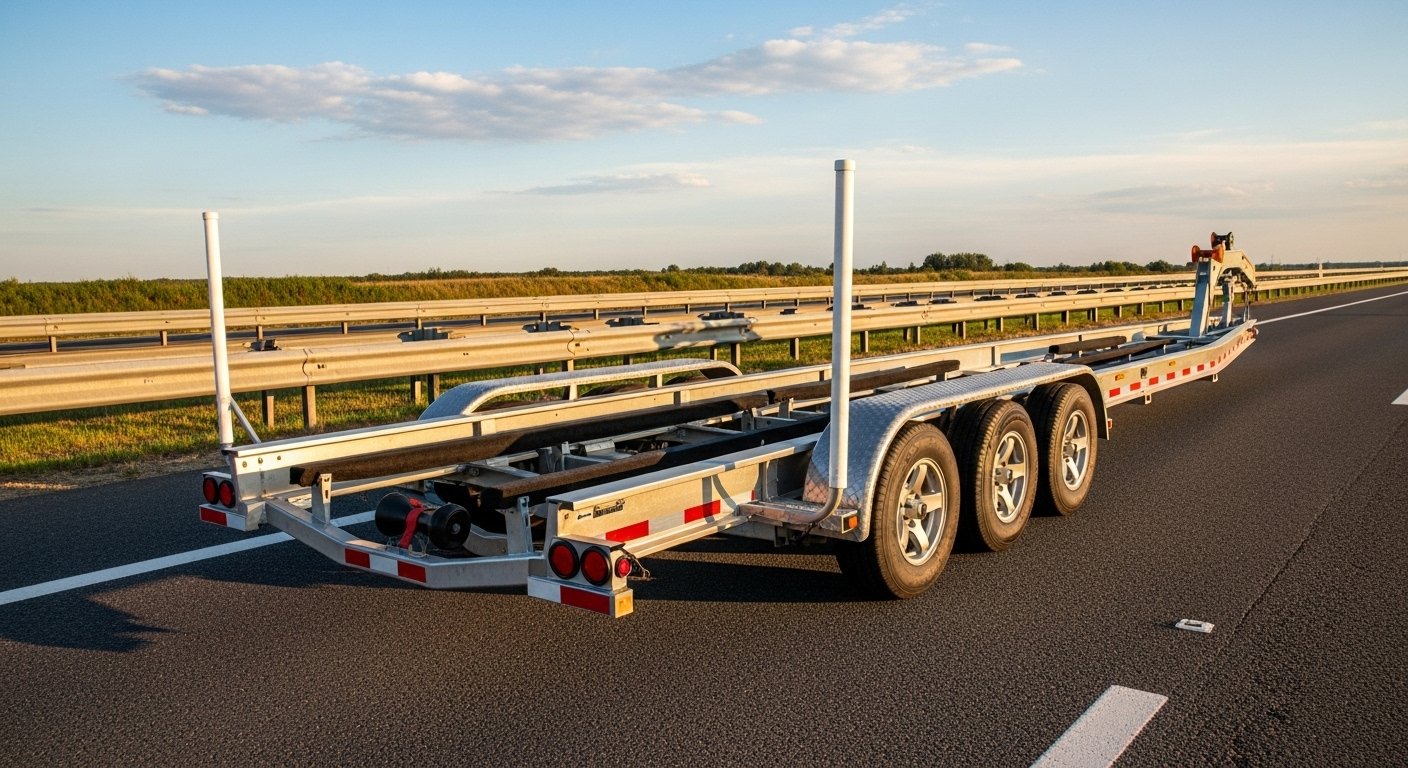
Imagine drawing a straight line across the two outermost points of the trailer—typically the fenders. That line represents the true trailer width.
Width Differences by Trailer Type
Not all trailers follow the same width standards. The design depends heavily on the type of boat:
Bunk Trailers
Simple, stable, commonly used
Width typically matches standard ranges based on boat size
Roller Trailers
Designed for easier launching
Slightly narrower frames, but fenders may still push them near the 8.5-foot max
Pontoon Trailers
Often wider due to two large pontoons
Many reach the legal limit
Some custom pontoon trailers exceed 8.5 feet and require permits
Custom vs. Factory Trailers
Factory trailers follow legal maximum limits
Custom trailers may exceed width depending on the boat’s hull or special requests
Why Width Affects Stability
Wider trailers offer:
Better tracking
Greater road stability
More room for support systems
But they also require wider turns and more towing awareness.
Trailer Width vs. Boat Width: Don’t Mix Them Up
Many new boat owners mistakenly assume the boat width (beam) and trailer width are the same. But trailers are often wider than the boat.
Boat Beam vs. Trailer Width
The boat beam is the widest point on the boat
The trailer width is usually measured at the fenders
Trailers extend beyond the boat to provide support and stability
How This Affects Loading and Towing
More width helps keep the boat centered
Improves balance during highway speeds
Impacts how closely the boat sits between the fenders
Where It Matters Most
Backing into ramps
Driving through narrow marinas
Passing through driveways
Garage door clearance
How Trailer Width Affects Towing & Storage
Your trailer’s width affects more than legal compliance—your daily towing experience depends on it.
Towing Impacts
Wider turns needed
More swing clearance around curbs
Harder maneuvering in neighborhoods
Potential blind spots
Fuel Stations & Storage
Trailer width becomes a hassle in:
Tight gas stations
Small storage units
Compact marinas
RV parks with narrow lanes
If you tow often, width is something you’ll constantly deal with.
Factors That Add Extra Width
Many owners unintentionally increase their trailer’s width with accessories.
Common Width-Adders
Oversized fenders
Carpeted guides
PVC loading guides
Side steps
Catwalks
Safety rails
Attached spare tires
Important:
All of these count toward the official width. Add-ons can push you from legal to oversize without realizing it.
Expert Tips for Choosing the Right Trailer Width
Before buying, upgrading, or customizing your trailer, keep these pro tips in mind:
Match Trailer Width to Boat Beam
A stable trailer should complement the boat’s width, not mirror it exactly.
Consider Your Tow Vehicle
A small SUV towing a trailer near 8.5 ft wide may struggle with visibility.
Think Ahead
Will you upgrade your boat next season?
Choose a trailer width that supports growth.
When to Choose Custom
You own a pontoon
You have a unique hull design
You want reinforced support beams
Ask These Questions at the Dealer
What is the true outer width?
Does it comply with 102-inch laws?
Are add-on guides included in the width?
Can it handle future boat sizes?
FAQs
Is an 8.5-ft wide boat trailer legal everywhere?
Yes, 102 inches (8.5 ft) is legal nationwide, though a few states have variations.
Why do some trailers look wider than the boat?
The trailer fenders often extend beyond the boat to improve stability and loading alignment.
Can I tow wider than 102 inches with a permit?
Yes but you will need a “wide load” permit and must follow escort or routing rules.
What’s the ideal width for launching stability?
For most recreational boats, anything in the 7–8.5 ft range provides excellent stability.
Conclusion: Know Your Trailer Width Before You Tow
Trailer width is more than a number—it determines how safely and legally you can tow your boat. Understanding whether your trailer fits within the 8.5-ft U.S. limit helps you avoid fines, towing hazards, and maneuvering headaches.
Before your next trip, take a minute to measure your trailer, review your state’s legal limits, and make sure your boat and tow vehicle are a safe match.
Is your current trailer truly the right width for your boat, or is it time to consider an upgrade before next season?