If you’ve ever driven an RV on a windy highway, uneven road, or long-distance route, you already know how much suspension affects the overall experience. From sway control to ride comfort, your suspension system is one of the most important parts of your vehicle’s safety and performance.
RV suspension upgrades are designed to fix common issues like excessive bouncing, poor handling, and uneven tire wear while improving stability and control. Whether you’re a full-time RVer or weekend traveler, upgrading your suspension can dramatically change how your RV feels on the road. For added peace of mind and professional RV guidance, Privacy RV helps travelers make informed decisions about upgrades that improve safety, comfort, and long-term performance.
Short Answer — What Are RV Suspension Upgrades?
RV suspension upgrades are modifications made to improve ride comfort, handling, load stability, and safety by enhancing or replacing factory suspension components like shocks, springs, and stabilizers.
In simple terms, they help your RV drive smoother, stay more stable, and handle heavy loads more efficiently.
Why RV Suspension Upgrades Matter for Better Driving Experience
How Suspension Affects RV Performance
Your suspension system directly impacts:
- Ride comfort on highways and rough roads
- Vehicle stability during wind or passing trucks
- Load control and weight distribution
- Braking efficiency and safety
A weak or outdated suspension system can make even a new RV feel unstable and tiring to drive.
Common Problems Without Suspension Upgrades
Without proper upgrades, RV owners often experience:
- Excessive swaying (“tail wagging”)
- Uneven tire wear
- Bottoming out on bumps
- Poor steering control
These issues not only reduce comfort but also increase long-term maintenance costs.
Types of RV Suspension Upgrades
Air Suspension Systems
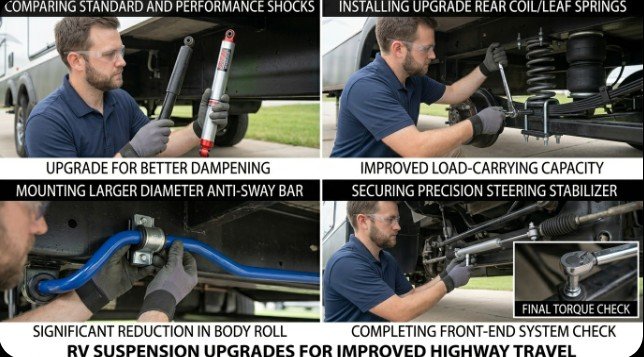
Air suspension systems use adjustable air pressure to level and stabilize your RV.
- Improves ride height and comfort
- Ideal for heavy RVs and long trips
- Provides adjustable load balancing
Heavy-Duty Shock Absorbers
Upgraded shocks reduce bouncing and road vibration.
- Reduces bounce and vibration
- Improves road stability
- Affordable upgrade option
Leaf Spring Upgrades
Leaf springs support heavy loads and improve durability.
- Increased load capacity
- Improved durability
- Common for towable RVs
Sway Bars and Stabilizers
These reduce side-to-side movement during travel.
- Reduces body roll
- Improves cornering control
- Essential for windy conditions
Steering Stabilizers
These help improve steering response and reduce driver fatigue.
- Enhances steering precision
- Reduces fatigue on long trips
- Improves highway control
RV Suspension Upgrades? What You Need to Know Before Installing
RV Weight and Load Capacity
Before upgrading, understand your:
- Gross Vehicle Weight Rating (GVWR)
- Passenger and cargo load requirements
Overloading or mismatching suspension parts can reduce safety.
Driving Conditions and Usage
Your suspension needs depend on how you use your RV:
- Highway travel vs off-road driving
- Full-time RV living vs occasional trips
Compatibility with Your RV Type
Different RVs require different setups:
- Motorhome suspension systems
- Travel trailer suspension differences
How to Install RV Suspension Upgrades
Step 1 — Inspect Current Suspension System
Check:
- Shocks
- Springs
- Bushings
Look for cracks, leaks, or worn parts.
Step 2 — Choose the Right Suspension Upgrade
Select based on:
- RV weight
- Travel style
- Comfort vs performance needs
Step 3 — Lift and Secure the RV Safely
- Use hydraulic jacks
- Place safety stands
- Ensure level and stable support
Step 4 — Remove Old Suspension Components
- Detach shocks or springs carefully
- Inspect mounting points for damage
Step 5 — Install New Suspension Parts
- Fit upgraded components properly
- Tighten bolts to manufacturer torque specs
Step 6 — Test and Adjust System
- Check ride height
- Test drive for stability and handling
Types of RV Suspension Upgrades
| Upgrade Type | Comfort | Stability | Cost | Best For |
|---|---|---|---|---|
| Air Suspension | High | High | High | Luxury RV travel |
| Shock Absorbers | Medium | Medium | Low | Budget upgrades |
| Leaf Springs | Medium | High | Medium | Heavy loads |
| Sway Bars | Medium | Very High | Medium | Windy road travel |
| Steering Stabilizers | Low | High | Medium | Long highway trips |
Benefits of RV Suspension Upgrades
Improved Ride Comfort
- Less vibration and bouncing
- Smoother highway travel
Enhanced Safety and Control
- Better braking stability
- Reduced sway and roll
Increased RV Lifespan
- Less stress on chassis
- Reduced tire and frame wear
Better Towing Performance
- Improved balance
- Safer towing under heavy loads
Common Mistakes When Choosing RV Suspension Upgrades
Ignoring RV Weight Ratings
Installing Incompatible Parts
Choosing Cheapest Option Only
Skipping Professional Alignment
Not Considering Driving Conditions
Sub-Questions People Also Ask About RV Suspension Upgrades
Are RV suspension upgrades worth it?
Yes, they significantly improve comfort, safety, and control.
What is the best suspension upgrade for RV sway?
Sway bars and stabilizers are most effective.
How much do RV suspension upgrades cost?
Costs vary from budget shocks to premium air systems.
Can suspension upgrades improve towing safety?
Yes, they improve balance and reduce sway.
Do air suspension systems improve ride comfort?
Yes, they offer the smoothest ride experience.
How long do upgraded suspension parts last?
Typically 5–10 years depending on usage.
Can I install RV suspension upgrades myself?
Basic upgrades may be DIY, but advanced systems need professionals.
What happens if RV suspension is not upgraded?
You may experience instability, tire wear, and poor ride quality.
Maintenance Tips After RV Suspension Upgrades
Regular Inspection of Suspension Components
Checking Air Pressure (if applicable)
Lubricating Moving Parts
Monitoring Tire Wear Patterns
Scheduling Professional Suspension Checks
When You Should Upgrade Your RV Suspension
Excessive Road Sway or Instability
Frequent Heavy Loading
Uneven Tire Wear
Poor Ride Comfort on Long Trips
Safety Concerns During Travel
FAQs About RV Suspension Upgrades
What are the best RV suspension upgrades for comfort?
Air suspension systems and upgraded shocks provide the best comfort.
Do suspension upgrades improve fuel efficiency?
Yes, better stability can reduce drag and improve efficiency slightly.
Can suspension upgrades fix RV sway completely?
They significantly reduce sway but may not eliminate it entirely.
How long does installation take?
Typically a few hours to a full day depending on complexity.
Are RV suspension upgrades expensive?
Costs range from affordable shocks to premium air systems.
Do I need a mechanic for installation?
Recommended for advanced systems like air suspension.
What is the most durable suspension upgrade?
Heavy-duty shocks and reinforced leaf springs are very durable.
Can upgrades increase RV resale value?
Yes, upgraded suspension is a strong selling point.
Conclusion — Are RV Suspension Upgrades Worth It?
Key Takeaways
- Suspension upgrades improve safety, comfort, and control
- Different systems serve different RV needs
- Proper installation is critical for performance
Final Thoughts
RV suspension upgrades are one of the most effective improvements for smoother travel and better handling. Choosing the right system based on your RV type and driving conditions ensures long-term safety, comfort, and confidence on the road.