A propane system is one of the most useful energy sources in an RV, powering your stove, heater, refrigerator, and water heater. But it also comes with serious responsibility. Even a small leak can become dangerous if ignored.
That’s why understanding how to find propane leak in RV is essential for every RV owner whether you travel full-time or only on weekends. This guide explains the warning signs, step-by-step detection methods, tools, and safety actions used by professionals so you can protect your RV and your family.
Short Answer — How to Find Propane Leak in RV?
To find a propane leak in an RV, you can use a combination of smell detection (rotten egg odor), soapy water bubble testing on gas lines, and propane leak detectors. These methods help identify leaks in hoses, regulators, fittings, or appliances before they become dangerous.
Why It’s Important to Know How to Find Propane Leak in RV?
Propane leaks are not just a minor inconvenience they are a serious safety risk that should never be ignored.
Safety Risks of Propane Leaks
- Fire and explosion hazards
- Carbon monoxide poisoning risks
- Breathing-related health issues from gas exposure
- Damage to RV appliances and internal systems
Even a small leak can escalate quickly in enclosed RV spaces, making early detection critical.
Common RV Propane Usage Areas
- RV stoves and ovens
- Water heaters
- Refrigerators
- Furnaces and heating systems
Signs of a Propane Leak in RV
Knowing the early warning signs can help you act before the situation becomes dangerous.
Smell and Sensory Indicators
- Rotten egg or sulfur-like smell (added odor for safety detection)
- Hissing sound near gas lines or appliances
- Headaches, dizziness, or nausea inside the RV
Physical and Performance Signs
- Weak or inconsistent burner flame
- Appliances failing to start or operate properly
- Unexpectedly fast propane tank depletion
How to Find Propane Leak in RV?
This is the most important section follow these steps carefully and in order.
Step 1 — Turn Off All Propane Appliances
- Shut off stove, heater, refrigerator, and water heater
- Close the propane tank valve completely
Step 2 — Perform a Visual Inspection
- Check hoses for cracks or wear
- Look for corrosion on metal fittings
- Inspect regulator connections for looseness
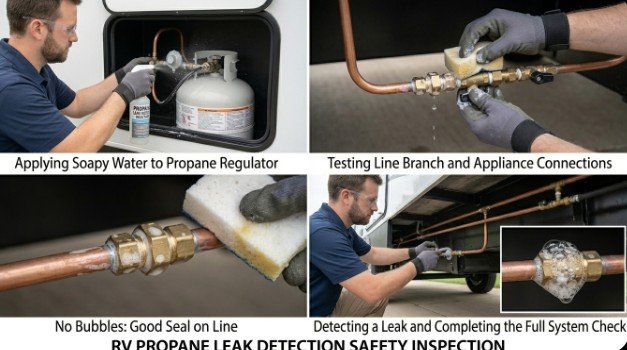
Step 3 — Use Soapy Water Leak Test
- Mix dish soap with water in a spray bottle
- Apply it to all gas connections and hoses
- Watch for bubbling, which indicates escaping gas
Step 4 — Use a Propane Gas Detector
- Use handheld electronic leak detectors
- Install RV propane alarm systems inside your RV
- Scan near appliances and gas lines for alerts
Step 5 — Check Propane Tank and Regulator
- Inspect valve seals for damage
- Ensure regulator is not cracked or loose
- Tighten connections carefully if needed
Tools Needed to Detect Propane Leaks
Basic Detection Tools
- Soapy water spray bottle
- Flashlight for dark inspection areas
- Adjustable wrench for fittings
Advanced Safety Equipment
- Electronic propane leak detector
- RV propane alarm system
- Replacement hoses and regulators
Propane Leak Detection Methods
| Method | Accuracy | Cost | Ease of Use | Best For |
|---|---|---|---|---|
| Smell Detection | Medium | Free | Easy | First warning sign |
| Soapy Water Test | High | Very Low | Easy | DIY leak testing |
| Electronic Detector | Very High | Medium | Moderate | Precise detection |
| Professional Inspection | Highest | High | Easy for user | Full system check |
Common Causes of Propane Leaks in RV
Damaged or Aging Gas Hoses
Rubber hoses wear out over time and develop cracks.
Loose Fittings and Connections
Vibration during travel can loosen fittings.
Faulty Propane Regulator
A failing regulator can cause inconsistent pressure and leaks.
Corroded Metal Gas Lines
Moisture exposure leads to rust and weakening of lines.
Improper Installation or Maintenance
Poor installation is one of the most common causes of leaks.
Safety Guide When You Suspect a Propane Leak
Step 1 — Turn Off Propane Immediately
Stop gas flow at the main tank valve.
Step 2 — Open Windows and Ventilate RV
Allow fresh air circulation to reduce gas buildup.
Step 3 — Avoid Electrical Switches or Flames
Do not turn on lights or appliances that could spark.
Step 4 — Exit RV if Strong Smell Is Present
Prioritize personal safety over inspection.
Step 5 — Contact a Certified RV Technician
Professional inspection ensures safe repairs.
Safe vs Unsafe Propane System Conditions
| Feature | Safe System | Unsafe System |
|---|---|---|
| Smell | None | Rotten egg odor |
| Gas Flow | Stable | Irregular or weak |
| Connections | Tight and sealed | Loose or cracked |
| Detector Alarm | No alert | Frequent alerts |
| Appliance Performance | Normal | Weak flame or failure |
How to Prevent Propane Leaks in RV
Regular Hose and Regulator Inspections
Check components before and after trips.
Replace Old or Damaged Gas Lines
Do not wait for visible failure.
Use High-Quality Propane Components
Cheap parts often fail faster.
Install RV Propane Leak Detectors
Early warning systems save lives.
Schedule Annual Professional Inspections
Recommended for full system safety.
Sub-Questions People Also Ask About RV Propane Leaks
How do I know if I have a propane leak in my RV?
Look for smell, hissing sounds, and appliance issues.
Can a small propane leak be dangerous?
Yes, even small leaks can become serious quickly.
What does an RV propane leak smell like?
It smells like rotten eggs or sulfur.
How do you test propane lines for leaks?
Use a soapy water solution or electronic detector.
Can RV propane leaks go away on their own?
No, leaks always require repair.
How often should propane lines be checked?
At least every few months or before trips.
Do RV propane detectors expire?
Yes, most last 5–7 years.
What causes propane leaks in RV appliances?
Wear, damage, poor maintenance, or faulty installation.
FAQs About How to Find Propane Leak in RV?
What is the fastest way how to find propane leak in RV?
Smell detection followed by a soapy water test is the fastest method.
Is it safe to stay in RV with a propane smell?
No, you should ventilate and exit immediately if strong odor is present.
Can I use soap and water to detect propane leaks?
Yes, it is one of the most effective DIY methods.
Do RV propane detectors detect all leaks?
They detect most leaks but should be used with manual inspection.
How much does it cost to fix a propane leak in RV?
It varies, typically $50–$300 depending on severity.
Can propane leaks happen when tank is off?
Yes, residual gas or faulty connections can still leak.
Should I turn off electricity during a propane leak check?
Yes, to avoid ignition risk.
When should I call a professional for propane leak issues?
Immediately if you detect strong odor or cannot locate the leak.
Conclusion — Safe Way to Handle RV Propane Leaks
Key Takeaways
- Early detection prevents serious safety hazards
- Soapy water and detectors are most effective DIY methods
- Regular maintenance reduces leak risks significantly
Final Thoughts
Understanding how to find propane leak in RV is essential for safe RV living. With proper inspection, routine maintenance, and quick response to warning signs, you can keep your RV safe, efficient, and ready for every journey without unnecessary risk. For RV owners who want added peace of mind and professional guidance, Privacy RV provides helpful expertise and support to ensure your RV systems stay safe and properly maintained.