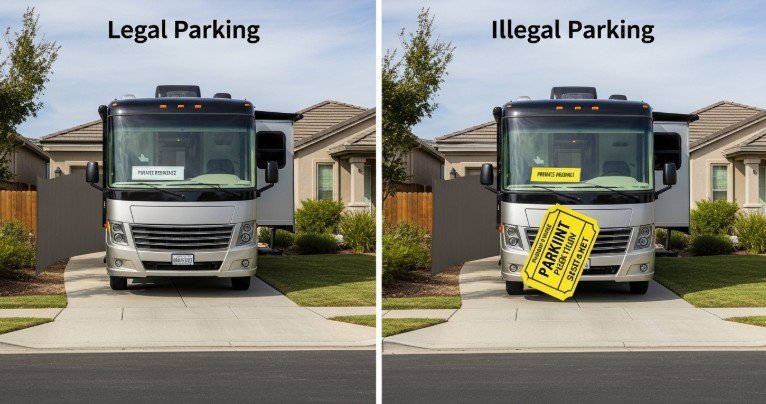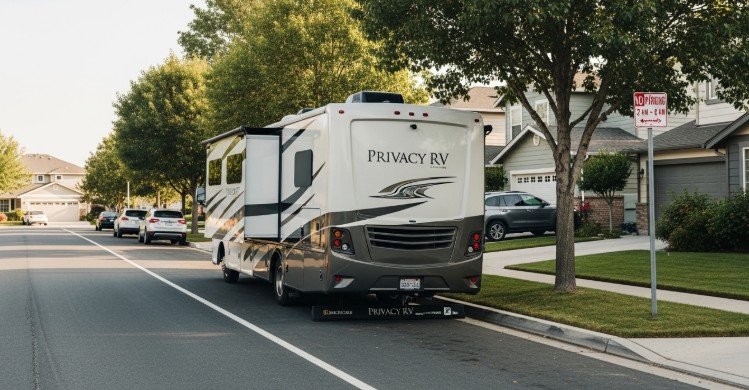
Parking an RV seems simple until you try doing it in a residential neighborhood or city street. What looks like an empty curb can quickly turn into a legal issue depending on local regulations, HOA rules, and enforcement policies.
So, can you park an RV on the street? The answer is not universal. Some places allow short-term street parking, while others strictly prohibit it altogether. Understanding the rules before you park is essential to avoid fines, towing, or complaints.
This guide breaks down everything you need to know, from legality and restrictions to alternatives and best practices.
Short Answer — Can You Park an RV on the Street?
- In many areas, yes, but only under specific conditions
- Some cities allow temporary parking, while others ban RV street parking entirely
- Common restrictions include:
- Time limits (overnight or hourly caps)
- Vehicle size restrictions
- Residential zoning rules
- Permit requirements
Always check local city ordinances before parking an RV on the street to avoid penalties.
Can You Park an RV on the Street? (Full Legal & Practical Explanation)
Can you Park an RV on the street in Residential Areas?
In most residential zones, RV street parking is heavily regulated.
Common restrictions include:
- HOA rules banning RV storage on streets
- Narrow residential roads that limit large vehicles
- Visibility and safety concerns for driveways and intersections
Some neighborhoods allow short-term parking only for:
- Loading and unloading
- Temporary preparation before travel
Can you park an rv on the street overnight legally?
Overnight RV parking depends entirely on city laws.
- Some cities allow overnight parking with time restrictions
- Others prohibit sleeping in vehicles on public streets
- Enforcement varies significantly depending on local authorities
In strict cities, even one night can result in a ticket or towing.
Why Cities Regulate RV Street Parking
Traffic safety and visibility concerns
Large RVs can block sightlines for drivers and pedestrians, increasing accident risk.
Neighborhood aesthetics and zoning rules
Many residential areas restrict oversized vehicles to maintain uniform appearance.
Public space limitations
Street space is limited and shared between residents, visitors, and emergency access.
Long-term storage prevention laws
Cities prevent RVs from being used as permanent storage units on public roads.
Common Rules for Parking an RV on the Street
Time limits (2 hours, 24 hours, or overnight caps)
Many cities restrict RV parking to short durations only.
Permit-based street parking systems
Some areas require special permits for oversized vehicles.
Size and length restrictions
Long RVs may be banned from certain streets entirely.
Residential vs commercial street differences
Commercial zones often have more flexible parking rules than residential areas.
No camping or sleeping ordinances
Even if parking is allowed, sleeping inside the RV may be prohibited.
Step-by-Step Guide: How to Check If You Can Park an RV on the Street
Step 1 – Check Local City Ordinances
- Visit the official city website
- Search for “RV parking laws” or “oversized vehicle rules”
Step 2 – Review HOA or Neighborhood Rules
HOA rules often override city allowances and can impose stricter limits.
Step 3 – Look for Street Signage
- Time-limited parking signs
- Permit-only zones
- Tow-away warnings
Step 4 – Contact Local Parking Authority
Ask about:
- Enforcement frequency
- Fines
- Towing policies
Step 5 – Evaluate Safety and Practicality
- Street width and turning space
- Traffic flow
- Risk of vandalism or damage
Comparison Table — RV Street Parking Options
| Parking Type | Legality | Duration | Cost | Risk Level | Best For |
|---|---|---|---|---|---|
| Residential Street Parking | Varies by city | Short-term | Free | Medium-High | Temporary stops |
| Commercial Street Parking | Often allowed | Limited hours | Free/paid | Medium | Urban access |
| Permit Parking Zones | Allowed with permit | Extended | Paid permit | Low | Residents |
| No-Parking Zones | Illegal | None | N/A | Very High | Avoid completely |
| Overnight Street Parking | Rarely allowed | Night only | Free | High | Emergency use |
Risks of Parking an RV on the Street
Fines and tickets
Violations can result in daily fines depending on the city.
Vehicle towing or impound
Illegal parking may lead to towing at the owner’s expense.
HOA penalties
HOAs can issue fines or legal notices.
Safety risks (theft or vandalism)
Street parking increases exposure to break-ins or damage.
Complaints from neighbors
Community complaints often trigger enforcement actions.
Alternatives If You Can’t Park an RV on the Street
RV parks and campgrounds
Legal and safe, but usually paid options.
Storage facilities for RVs
Secure long-term parking with protection.
Walmart or truck stop parking (where allowed)
Some businesses allow overnight stays.
Public lands (boondocking options)
Free camping on designated federal lands.
Private driveway rental apps
Platforms allow homeowners to rent driveway space.
Tips for Safely Parking an RV on the Street
Park during allowed time windows only
Never exceed posted time limits.
Avoid blocking driveways or fire hydrants
This is one of the fastest ways to get fined or towed.
Keep RV clean and low-profile
A well-maintained RV attracts fewer complaints.
Use wheel chocks and safety measures
Prevent accidental movement or rolling.
Move regularly to avoid violations
Even legal parking often requires movement every 24–72 hours.
Common Mistakes RV Owners Make With Street Parking
Assuming rules are the same everywhere
Regulations vary widely by city and state.
Ignoring HOA regulations
HOAs can be stricter than city laws.
Parking overnight without permission
A common cause of fines and towing.
Leaving RV unattended for long periods
Can be classified as illegal storage.
Not checking street signage carefully
Missing a small sign can lead to costly penalties.
FAQs — can you park an rv on the street?
Can you park an RV on the street overnight?
Only in some cities with specific time limits, many prohibit it entirely.
Is it legal to park an RV in front of your house?
It depends on local ordinances and HOA rules.
Do cities allow RV street parking?
Some do, but usually with restrictions and permits.
Can you sleep in an RV parked on the street?
Often prohibited even if parking is allowed.
What happens if you park an RV illegally on the street?
You may receive fines, citations, or towing.
Do you need a permit to park an RV on the street?
In some cities, yes, especially for long vehicles.
How long can an RV stay parked on a residential street?
Ranges from a few hours to 24–72 hours depending on location.
Are RV parking laws the same in every state?
No, laws vary significantly by city and municipality.
Final Thoughts: Can You Park an RV on the Street?
The reality is simple: it depends entirely on local laws, HOA rules, and enforcement practices.
- Short-term street parking is often allowed
- Long-term parking is usually restricted or prohibited
- Ignoring local rules can lead to fines, towing, or complaints
The safest approach is always to verify regulations first and consider alternatives like RV parks or designated parking areas when in doubt.
Understanding can you park an RV on the street isn’t just about convenience, it’s about avoiding legal trouble and protecting your vehicle. At Privacy RV, we always recommend checking local regulations first before parking to ensure a safe and hassle-free experience.