RV travel has changed how people experience freedom on the road. Instead of staying only in expensive campgrounds with full hookups, many RVers now choose a more flexible and adventurous approach known as dry camping. But what is it really, and how does it work in real life?
In simple terms, dry camping allows you to live and travel in your RV without connecting to external water, electricity, or sewer systems. It sounds simple, but it requires planning, resource management, and the right equipment.
This guide explains what is dry camping with an RV, how it works, what you need, and whether it’s right for your lifestyle.
Short Answer — What Is Dry Camping With an RV?
Dry camping with an RV means camping without hookups (no water, electricity, or sewer). It is also called boondocking or off-grid RV camping.
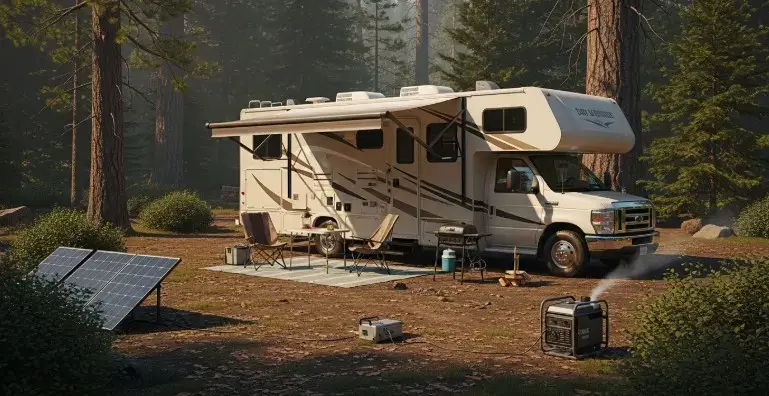
Instead of relying on campground utilities, you use:
- Onboard water tanks
- Battery or solar power
- Propane systems
- Occasionally a generator
It is commonly done on public lands, remote areas, or designated off-grid camping spots. The focus is self-sufficiency, conservation, and independence from traditional campgrounds.
What Is Dry Camping With an RV? (Complete Explanation)
What is dry camping with an rv and how does it work?
To understand what is dry camping with an RV, you need to understand how the RV functions independently:
- Fresh water is stored in an onboard tank
- Wastewater goes into gray and black tanks
- Electricity comes from batteries, solar panels, or generators
- Propane powers heating, cooking, and refrigeration
Unlike full-hookup camping, every resource is limited, so usage must be carefully managed.
Where do people go dry camping with an rv?
RVers who practice dry camping usually stay in locations where hookups are not available:
- National Forests
- Bureau of Land Management (BLM) land
- Remote lakes and deserts
- Mountain pull-offs and scenic overlooks
- Select parking lots or truck stops (where allowed)
These locations offer privacy, open space, and often zero cost.
Why RV Travelers Choose Dry Camping
Cost savings (no campground fees)
One of the biggest reasons people switch to dry camping is financial freedom. Many locations are completely free.
Freedom and remote locations
You are not limited to crowded RV parks—you can stay near lakes, forests, and scenic wilderness.
Avoiding crowded RV parks
No tight parking spaces, noisy neighbors, or reservation stress.
Off-grid lifestyle appeal
Many RVers enjoy disconnecting from city infrastructure and living more independently.
Essential Systems Used in Dry Camping
Fresh Water Storage System
Your RV carries a limited amount of water. Conservation is critical:
- Short showers
- Minimal dishwashing
- Efficient cleaning habits
Power System (Battery, Solar, Generator)
Your energy system determines comfort levels:
- Solar panels: best for long-term off-grid stays
- Batteries: store energy for nighttime use
- Generator: backup during high demand
Waste Management System
All wastewater is stored onboard:
- Gray tank (sinks and shower water)
- Black tank (toilet waste)
- Requires periodic dumping at approved stations
Propane System
Propane is essential for:
- Cooking meals
- Heating the RV
- Running absorption refrigerators in some models
How to Start Dry Camping With an RV
Step 1 – Prepare Your RV for Off-Grid Use
- Fill freshwater tank
- Charge batteries fully
- Check propane levels
Step 2 – Choose a Legal Dry Camping Location
Understand local rules for:
- Public land camping
- Private property permissions
- Restricted zones
Step 3 – Manage Water Usage Efficiently
- Take short showers
- Use water-saving faucets
- Reuse water when possible
Step 4 – Optimize Power Consumption
- Use LED lighting
- Limit high-power appliances
- Monitor battery usage daily
Step 5 – Plan Waste Disposal Strategy
- Locate nearest dump stations
- Track tank levels frequently
Step 6 – Set Up Emergency Backup Systems
- Extra fuel for generator
- Portable power bank
- Emergency water supply
Types of Dry Camping With an RV (Comparison Table)
| Type | Location | Power Source | Water Access | Difficulty | Best For |
| Boondocking | Public lands | Solar/battery | None | Medium | Off-grid living |
| Dispersed Camping | Forest/BLM land | Solar/generator | None | Medium | Nature camping |
| Urban Dry Camping | Parking lots | Battery only | Limited | Easy | Overnight stops |
| Primitive Campsites | Remote sites | Minimal power | Carry-in water | Hard | Experienced RVers |
Pros and Cons of Dry Camping With an RV
Advantages
- Free or very low cost
- Complete privacy and solitude
- Flexible travel plans
- Closer connection with nature
Disadvantages
- Limited water and electricity
- No sewer hookups
- Requires planning and discipline
- Weather can affect comfort and safety
Common Mistakes Beginners Make in Dry Camping
Underestimating water usage
Water runs out faster than most beginners expect.
Running out of battery power
Poor energy planning leads to dead batteries and discomfort.
Poor waste tank management
Ignoring tank levels causes backups and system damage.
Not checking legal camping rules
Some land is restricted or time-limited.
Overusing propane or generator
Leads to higher costs and fuel shortages.
Essential Gear for Successful Dry Camping
Solar panels and portable power stations
Help maintain electricity without hookups.
Water storage containers
Extend your freshwater supply.
High-capacity RV batteries
Improve off-grid power reliability.
Portable dump tanks (blue boy)
Allow easier waste transport to dump stations.
Efficient cooking equipment
Reduces propane consumption and saves energy.
Safety Tips for Dry Camping With an RV
Stay aware of weather conditions
Storms and extreme temperatures affect safety and resources.
Keep emergency supplies ready
Include food, water, and backup power.
Maintain communication
Use cell boosters or satellite internet when needed.
Avoid isolated risky areas alone
Choose safe and legally recognized locations.
Monitor fuel, water, and power daily
Prevention is key in off-grid living.
Is Dry Camping With an RV Right for You?
Best suited for minimalist travelers
Perfect for those who enjoy simple, flexible living.
Ideal for experienced RV owners
Those who understand RV systems benefit most.
Not ideal for beginners without backup systems
Lack of preparation can cause problems quickly.
Lifestyle fit vs comfort expectations
It requires balancing freedom with reduced comfort.
FAQs — what is dry camping with an rv?
What is dry camping with an RV in simple terms?
It means camping without hookups using your RV’s internal systems for water, power, and waste.
Is dry camping the same as boondocking?
Yes, the terms are often used interchangeably.
How long can you dry camp in an RV?
Anywhere from a few days to several weeks depending on resources.
Do RV batteries last during dry camping?
Yes, but duration depends on usage and whether you have solar charging.
Can you shower while dry camping?
Yes, but showers must be short to conserve water.
Is dry camping legal everywhere?
No, it depends on land rules and local regulations.
What do you need for dry camping in an RV?
Water, power system, propane, waste management plan, and emergency supplies.
Is dry camping safe for beginners?
Yes, but only with proper preparation and basic RV knowledge.
Final Thoughts: Understanding What Is Dry Camping With an RV
Dry camping is one of the most rewarding ways to experience RV life. It offers unmatched freedom, cost savings, and connection to nature, but it also requires responsibility.
To truly succeed with what is dry camping with an RV, you need more than just equipment. You need planning, awareness, and smart resource management.
Start small, learn how your RV systems behave off-grid, and gradually extend your stays. Once mastered, dry camping opens the door to a more flexible, adventurous, and independent lifestyle.