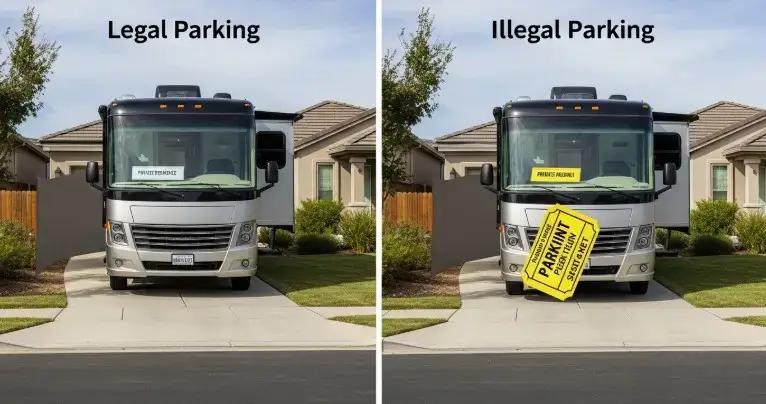
Owning an RV brings freedom, travel, and flexibility, but it also introduces practical challenges when you’re back home. One of the most common questions RV owners ask is: can you park an RV in your driveway?
At first glance, it seems simple. You own the property, so you should be able to park your RV there, right? In reality, the answer depends on city ordinances, HOA rules, zoning laws, and even how visible your RV is from the street.
This guide breaks everything down in detail so you can avoid fines, disputes, and legal issues while making informed decisions about RV storage at home.
Short Answer — Can You Park an RV in Your Driveway?
In many cases, yes, but it depends on local city laws, HOA rules, and property restrictions.
Some areas allow driveway RV parking with limits on:
- Time duration (temporary vs long-term storage)
- RV size and height
- Visibility from the street
- HOA design or aesthetic rules
Other neighborhoods completely prohibit it, even on private property.
The safest rule: always check local ordinances and HOA regulations before parking your RV in the driveway.
Can You Park an RV in Your Driveway? (Full Legal & Practical Explanation)
can you park an rv in your driveway in residential areas?
Most residential zones allow temporary driveway parking, especially for loading, cleaning, or preparing for trips.
However, common restrictions include:
- The RV must stay fully on private property
- It cannot block sidewalks, driveways, or streets
- HOA rules may restrict visibility from the road
- Some cities require RV covers, fencing, or screening
Example: A city may allow a 48–72 hour RV driveway stay before requiring removal or relocation.
Can you park an RV in your driveway long-term?
Long-term RV driveway parking is where most issues arise.
- Many cities limit storage to a few days or weeks
- HOAs often prohibit permanent RV parking altogether
- Enforcement depends heavily on complaints and visibility
In many neighborhoods, a visible RV parked long-term can trigger:
- Code enforcement visits
- HOA violation notices
- Neighbor complaints
Why Driveway RV Parking Is Regulated
Neighborhood appearance and property value concerns
Cities and HOAs regulate RV visibility to maintain uniform neighborhood appearance and property values.
Safety and fire access regulations
Driveways must remain clear for emergency access, fire lanes, and visibility.
Zoning and land-use restrictions
Residential zoning laws often define what types of vehicles can be stored outdoors.
Street visibility and obstruction issues
Large RVs can block sightlines, creating traffic and pedestrian safety concerns.
Community HOA enforcement rules
HOAs may enforce stricter rules than the city itself, including fines and legal action.
Common Rules for Parking an RV in Your Driveway
Time limits (24 hours, weekends, or temporary use only)
Some cities allow short stays for loading/unloading only.
Size and height restrictions
Oversized RVs may exceed zoning allowances.
Screening or covering requirements
Some areas require RVs to be hidden with fences or covers.
HOA approval requirements
HOAs may require written permission before parking an RV.
Permit-based driveway parking rules in some cities
Certain municipalities require temporary permits for RV storage.
How to Check If You Can Park an RV in Your Driveway
Step 1 – Review Local City Ordinances
Search your city’s official site for:
- “RV driveway parking laws”
- “oversized vehicle regulations”
- zoning restrictions
Step 2 – Check HOA Regulations (If Applicable)
HOA rules are often stricter than city laws and may completely ban RV parking.
Step 3 – Inspect Property Space Requirements
Ensure:
- RV fits fully within driveway
- No sidewalk or street obstruction
- Adequate clearance for movement
Step 4 – Review Visibility Rules
Some cities restrict RV visibility from the street or require screening.
Step 5 – Confirm Permit Requirements
Check if your city requires:
- Temporary parking permits
- RV storage registration
- time-limited exceptions
Step 6 – Verify Enforcement Policies
Contact local authorities to understand:
- Fine amounts
- Complaint procedures
- towing risks
Comparison Table — RV Driveway Parking vs Other Options
| Parking Option | Legality | Duration | Cost | Risk Level | Best For |
| Driveway Parking | Varies by city/HOA | Short-term to limited long-term | Free | Low-Medium | Homeowners |
| Street Parking | Strictly regulated | Short-term only | Free | Medium-High | Temporary use |
| RV Parks | Fully legal | Long-term | Paid | Low | Full-time RVers |
| Storage Facilities | Fully legal | Long-term | Paid | Very Low | Winter storage |
| Boondocking | Legal on public land | Variable | Free | Low-Medium | Off-grid travel |
Risks of Parking an RV in Your Driveway
HOA fines and violation notices
HOAs can issue repeated fines or legal action for non-compliance.
City citations or zoning violations
Local authorities may issue tickets or require removal.
Neighbor complaints and disputes
Visible RVs often trigger neighborhood complaints.
Reduced curb appeal or property concerns
Long-term RV parking can impact home aesthetics and resale value.
Insurance complications in rare cases
Some policies may have restrictions on commercial or long-term vehicle storage.
Alternatives If You Can’t Park an RV in Your Driveway
RV storage facilities (indoor/outdoor)
Secure and legal long-term solution.
Private land or friend’s driveway
Often flexible and low-cost.
RV parks with long-term rates
Monthly stays can be more affordable than expected.
Rural property parking options
Less restrictive zoning outside city limits.
Short-term boondocking locations
Useful for travelers between destinations.
Tips for Safely Parking an RV in Your Driveway
Keep RV fully within property boundaries
Never let tires or bumpers extend into public space.
Avoid blocking sidewalks or driveways
This is one of the most common violation triggers.
Use RV covers or screens if required
Helps meet HOA aesthetic requirements.
Maintain clean and organized appearance
A well-maintained RV reduces neighbor complaints.
Move RV periodically if required by law
Some cities require rotation every few days.
Common Mistakes RV Owners Make With Driveway Parking
Ignoring HOA restrictions
HOA rules often override city allowances.
Assuming city laws override neighborhood rules
Both must be followed simultaneously.
Parking partially on the street
This is a frequent cause of fines.
Leaving RV parked for too long without checking limits
Time limits vary widely and are often enforced strictly.
Not verifying permit requirements
Missing permit rules can lead to immediate violations.
FAQs — can you park an rv in your driveway?
Can you park an RV in your driveway overnight?
Yes in some areas, but many cities limit overnight or require permits.
Is it legal to park an RV in your driveway long-term?
Often restricted or prohibited depending on city and HOA rules.
Do HOAs allow RVs in driveways?
Some do temporarily, but many ban them entirely.
Can you sleep in an RV parked in your driveway?
In many cities, this is prohibited even if parking is allowed.
Do you need a permit to park an RV in your driveway?
Some municipalities require temporary or oversized vehicle permits.
Can neighbors complain about RV driveway parking?
Yes, and complaints often trigger enforcement actions.
Does RV size matter for driveway parking?
Yes, larger RVs face stricter restrictions.
What happens if you violate driveway RV parking rules?
You may face fines, warnings, or forced removal of the RV.
Final Thoughts: Can You Park an RV in Your Driveway?
The answer depends heavily on local laws and HOA restrictions.
- Short-term driveway parking is often allowed
- Long-term storage is commonly restricted
- Enforcement varies but complaints can escalate quickly
The safest approach is always to verify regulations before parking your RV.
When in doubt, choose legal alternatives like RV storage facilities or designated parking areas.
Ultimately, understanding can you park an RV in your driveway helps you avoid fines, prevent disputes, and protect both your property value and your RV investment.