What Maintenance Is Required for an RV? In Simple Terms
Regular RV maintenance includes routine inspections and servicing of all major systems such as the engine (for motorhomes), roof seals, tires, plumbing, electrical components, batteries, brakes, HVAC systems, and exterior protection. In addition to these systems, owners must perform seasonal inspections in spring and fall, carry out pre-trip safety checks, and complete winterization before cold weather storage. These steps prevent expensive repairs, unexpected breakdowns, and long-term structural damage.
Why RV Maintenance Matters for Long-Term Performance
RV ownership is not just about travel freedom it’s about protecting a significant investment. Proper maintenance ensures your RV performs reliably across long distances and varying weather conditions.
Cost Prevention and Safety Benefits
Routine maintenance helps detect small issues before they turn into costly repairs. For example, a minor roof leak can lead to mold growth and structural damage if ignored. Similarly, underinflated tires can increase the risk of blowouts during highway travel, creating serious safety hazards.
How Maintenance Extends RV Lifespan
An RV that receives consistent care can last significantly longer than one that is neglected. Regular servicing of mechanical and structural components reduces wear and tear, allowing your RV to remain roadworthy for 15–20 years or more.
Common Problems Caused by Poor Maintenance
- Roof leaks leading to interior water damage
- Battery failure during trips
- HVAC system breakdown in extreme weather
- Plumbing blockages or frozen pipes
- Engine overheating or breakdown (motorhomes)
What Maintenance Is Required for an RV? Core Systems Breakdown
Understanding each system helps RV owners stay ahead of problems and maintain peak performance.
What Maintenance Is Required for an RV? Engine and Mechanical Systems (Motorhomes Only)
Motorhomes require vehicle-style maintenance similar to trucks:
- Oil changes and filter replacements every 3,000–7,000 miles
- Brake inspections before long trips
- Transmission servicing as recommended by manufacturer
- Coolant system checks to prevent overheating
Neglecting these can lead to breakdowns that are both costly and dangerous on the road.
Roof, Seals, and Exterior Protection
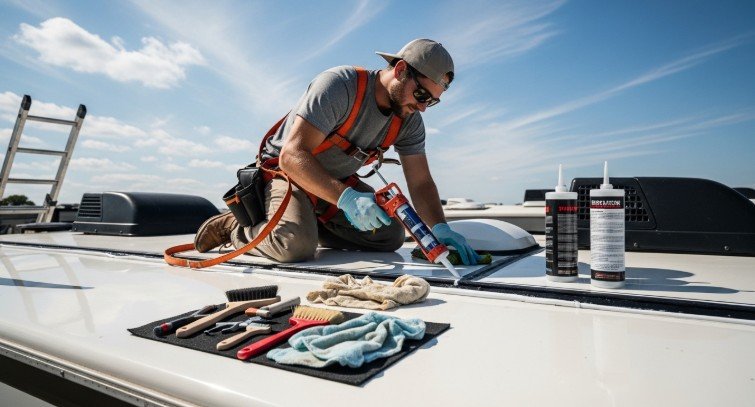
The roof is one of the most vulnerable areas of any RV:
- Inspect roof seals 2–4 times per year
- Reapply caulking around windows, vents, and doors
- Check for cracks, bubbling, or soft spots
- Wash and wax exterior to protect against UV damage
Water intrusion is one of the most expensive RV repairs, making this a critical maintenance area.
Tires and Suspension System Maintenance
- Check tire pressure before every trip
- Rotate tires according to mileage schedule
- Replace tires every 3–6 years regardless of tread
- Inspect suspension for wear, sagging, or alignment issues
Proper tire care is essential for road safety and fuel efficiency.
Plumbing System Maintenance
- Clean freshwater tanks regularly
- Flush grey and black water tanks after each trip
- Check for leaks under sinks and around fixtures
- Sanitize water system seasonally
Ignoring plumbing maintenance can lead to contamination and unpleasant odors.
Electrical System and Battery Care
- Maintain and charge batteries regularly
- Inspect shore power connections for wear
- Test fuses, breakers, and converters
- Store batteries properly during winter
Electrical failures are one of the most common RV issues on the road.
HVAC and Appliance Maintenance
- Clean or replace air conditioner filters
- Inspect furnace before cold weather use
- Check refrigerator cooling performance
- Ensure vents are free from blockage
Climate control systems directly affect comfort and safety during travel.
Seasonal Maintenance Schedule for RV Owners
Spring RV Preparation Checklist
- Inspect roof and reseal if needed
- Recharge batteries
- Test plumbing system after winter storage
- Check tire pressure and condition
Summer Travel Maintenance Tips
- Monitor tire pressure in hot weather
- Clean AC filters frequently
- Check coolant levels before long trips
Fall Maintenance and System Checks
- Inspect heating systems
- Drain water systems before freezing temperatures
- Perform full exterior inspection
Winter RV Storage and Winterization Steps
- Drain all water lines
- Add antifreeze to plumbing system
- Disconnect batteries or use trickle charger
- Cover RV or store indoors
What Maintenance Is Required for an RV? Step-by-Step Maintenance Guide
Step 1 – Exterior Inspection and Cleaning
Wash and inspect for cracks, rust, or seal damage.
Step 2 – Mechanical and Engine Checks (if applicable)
Check oil, coolant, brakes, and belts.
Step 3 – Plumbing System Flush and Test
Run water through all fixtures and inspect for leaks.
Step 4 – Electrical and Battery Testing
Test power systems, shore connection, and battery charge.
Step 5 – Roof and Seal Inspection
Look for weak points and reseal as needed.
Step 6 – Interior System Maintenance and Safety Checks
Inspect appliances, smoke detectors, and HVAC systems.
Step 7 – Final Pre-Trip Inspection
Confirm tires, lights, fluids, and safety gear are ready.
RV Maintenance Cost vs Repair Cost (Comparison Table Section)
| Maintenance Task | Frequency | Estimated Cost | Risk If Ignored |
|---|---|---|---|
| Oil Change | 3,000–7,000 miles | Low | Engine failure |
| Roof Sealing | 2–4 times/year | Low–Medium | Water damage |
| Tire Replacement | 3–6 years | Medium | Blowout risk |
| Battery Replacement | 2–5 years | Medium | Power failure |
| Plumbing Winterization | Annually | Low | Pipe freezing |
DIY vs Professional RV Maintenance
DIY RV Maintenance Pros and Cons
DIY maintenance saves money and builds familiarity with your RV, but it requires time, tools, and technical knowledge. Mistakes can lead to expensive repairs if done incorrectly.
Professional RV Service Advantages
Professionals provide expert diagnostics, warranty-backed work, and faster repairs. They are especially useful for engine, electrical, and structural issues.
When You Should Always Hire a Technician
- Engine or transmission issues
- Electrical system failures
- Major roof leaks or structural damage
Common RV Maintenance Mistakes to Avoid
Ignoring Roof Leaks
Small leaks can escalate into major interior damage quickly.
Skipping Tire Checks Before Trips
Underinflated or aged tires are a leading cause of RV accidents.
Forgetting Winterization
Frozen pipes can cause thousands in damage.
Overlooking Battery Health
Dead batteries often leave RVs unusable at the worst time.
Signs Your RV Needs Immediate Maintenance
Water Leaks or Soft Roof Spots
Indicates structural compromise or seal failure.
Electrical Failures or Flickering Lights
Signals wiring or battery problems.
Strange Engine Noises (Motorhomes)
Could indicate serious mechanical issues.
Plumbing Odors or Slow Drainage
Suggests blockages or tank issues.
Frequently Asked Questions (FAQs)
How often should RV maintenance be done?
RV maintenance should be performed seasonally, before long trips, and annually for major systems.
What is the most important RV maintenance task?
Roof sealing and tire maintenance are the most critical for preventing costly damage and accidents.
H3: Can I do RV maintenance myself?
Yes, basic tasks like cleaning, inspections, and minor repairs can be DIY, but mechanical and electrical systems often require professionals.
How much does RV maintenance cost per year?
On average, RV maintenance can range from a few hundred to a few thousand dollars depending on usage and type.
What happens if I don’t maintain my RV?
Neglect can lead to structural damage, mechanical failure, safety risks, and significantly reduced RV lifespan.
Do RVs need winter maintenance every year?
Yes, winterization is essential in freezing climates to prevent pipe and system damage.
How long does RV maintenance take?
Basic maintenance can take a few hours, while full seasonal servicing may take a full day or more.
Is RV maintenance different for motorhomes and trailers?
Yes, motorhomes require engine maintenance, while trailers focus more on structural, electrical, and plumbing systems.
Final Thoughts on What Maintenance Is Required for an RV?
Key Takeaways for RV Owners
Consistent maintenance is the foundation of safe and enjoyable RV travel. From roof sealing to tire care and system inspections, every part of your RV plays a role in performance and safety and at Privacy RV, we emphasize this proactive approach to help owners protect their investment, improve reliability, and enjoy stress-free journeys on the road.
Long-Term Maintenance Strategy for Reliability and Value
The most effective approach is a proactive maintenance routine seasonal checks, pre-trip inspections, and annual servicing. This not only prevents costly repairs but also preserves your RV’s value and ensures stress-free travel for years to come.