Choosing the right type of recreational vehicle can feel confusing especially when terms like “RV,” “camper,” and “pop up camper” are used interchangeably. If you’re new to camping or exploring budget-friendly travel options, you’ve likely asked: Is a pop up camper considered an RV?
This guide provides a complete, expert-level breakdown of classifications, features, comparisons, and decision-making factors so you can confidently understand where pop up campers fit in the RV world.
Is a Pop Up Camper Considered an RV? (Quick Answer)
Yes, a pop up camper is considered an RV (Recreational Vehicle). It belongs to the towable RV category, specifically classified as a folding or collapsible trailer.
Even though it is smaller and more basic than many RVs, it still qualifies because it provides mobile living space, including sleeping areas and sometimes cooking or utility features. In short, it meets the essential definition of an RV.
Understanding RV Classification: Where Pop Up Campers Fit
To fully understand why pop up campers are classified as RVs, it’s important to look at how RVs are defined and categorized.
What Qualifies as an RV?
An RV is any vehicle or trailer designed to provide temporary living accommodations for travel, recreation, or camping.
Core requirements include:
- Sleeping space
- Basic living functionality (cooking, storage, or sanitation)
- Mobility (motorized or towable)
RVs fall into two main categories:
- Motorized RVs (Class A, B, C motorhomes)
- Towable RVs (trailers, fifth wheels, campers)
Types of Towable RVs
Pop up campers belong to the towable category, which includes:
- Travel trailers
- Fifth-wheel trailers
- Teardrop trailers
- Pop up campers (folding campers)
Each type varies in size, cost, and features but all are recognized as RVs.
Why Pop Up Campers Are Classified as RVs
Pop up campers meet all RV criteria because they:
- Provide temporary living accommodations
- Are designed for mobility and travel
- Include sleeping areas and sometimes cooking setups
Despite their simplicity, they fulfill the functional definition of an RV.
Is a Pop Up Camper Considered an RV? Key Characteristics Explained
Size and Structure
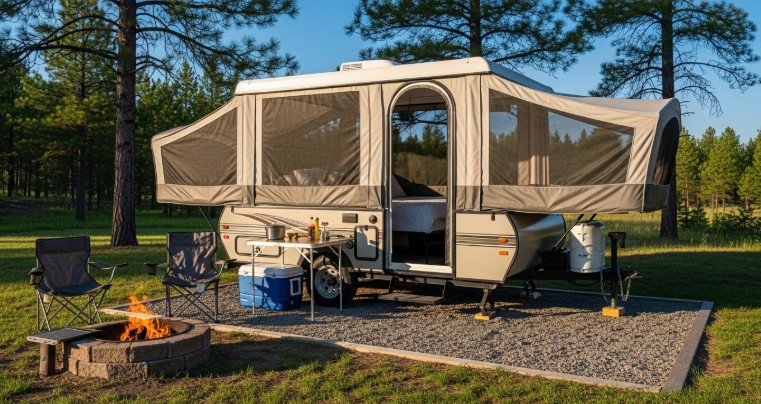
Pop up campers are known for their collapsible design, which allows them to fold down for easy towing and storage. When set up, they expand to provide sleeping areas and living space.
Amenities and Features
Unlike larger RVs, pop up campers focus on essentials:
- Fold-out beds
- Convertible seating
- Small kitchen or sink (in some models)
- Limited or no bathroom facilities
This minimalist approach makes them efficient but less luxurious.
Setup and Portability
Pop up campers require manual setup at campsites, including:
- Raising the roof
- Extending sleeping platforms
- Securing canvas sides
However, they are significantly easier to tow than larger RVs.
Cost and Accessibility
One of the biggest advantages is affordability. Pop up campers are:
- Lower in upfront cost
- Cheaper to maintain
- Accessible to first-time buyers
They are often considered the best entry point into RV ownership.
Pop Up Camper vs Other RV Types (Core Comparison)
Pop Up Camper vs Travel Trailer
Travel trailers offer more amenities, including bathrooms and full kitchens, while pop up campers are lighter and more compact.
Pop Up Camper vs Motorhome
Motorhomes are fully motorized and require no towing, whereas pop up campers depend on a separate vehicle.
Pop Up Camper vs Teardrop Trailer
Teardrop trailers are hard-sided and more weather-resistant, while pop up campers provide more interior space when expanded.
How to Decide If a Pop Up Camper RV Is Right for You
Step 1 – Define Your Travel Needs
If you plan weekend trips or occasional camping, a pop up camper is ideal. For long-term travel, consider a larger RV.
Step 2 – Evaluate Your Budget
Factor in purchase price, maintenance, storage, and fuel costs. Pop up campers are among the most budget-friendly options.
Step 3 – Check Your Vehicle’s Towing Capacity
Ensure your car, SUV, or truck can safely tow the camper without strain.
Step 4 – Consider Comfort and Space Requirements
Think about how many people will travel with you and how much space you need.
Step 5 – Assess Setup and Convenience
Be realistic about your willingness to set up and pack down the camper at each stop.
Step 6 – Compare Maintenance Needs
Pop up campers have fewer systems, meaning lower maintenance compared to full RVs.
Step 7 – Test Before You Buy
Renting or visiting dealerships allows you to experience real-world usability before committing.
Pop Up Camper vs RV Comparison Table
| Feature | Pop Up Camper | Traditional RV |
|---|---|---|
| Classification | Towable RV | Motorized or towable RV |
| Size | Small, collapsible | Medium to large |
| Amenities | Basic | Full living amenities |
| Cost | Low | Medium to high |
| Setup | Manual setup required | Minimal (motorhomes) |
| Towing | Required | Optional |
| Maintenance | Low | Moderate to high |
| Best For | Weekend camping | Long trips, full-time living |
Pros and Cons of Pop Up Campers as RVs
Advantages of Pop Up Campers
- Affordable entry into RV lifestyle
- Lightweight and easy to tow
- Compact for storage and parking
- Great for beginners
Disadvantages of Pop Up Campers
- Limited amenities
- Less insulation and weather protection
- Requires setup time at each campsite
Common Scenarios: When a Pop Up Camper Is the Better Choice
Best for First-Time RV Owners
Pop up campers are easy to manage and ideal for learning the basics of RV travel.
Best for Budget-Friendly Travel
They offer a cost-effective way to explore camping without a large investment.
Best for Occasional Camping Trips
Perfect for weekend getaways and seasonal use.
When a Full RV Might Be Better
If you need full bathrooms, long-term living space, or luxury amenities, a traditional RV is the better option.
People Also Ask (Sub-Questions Section)
Is a pop up camper legally considered an RV?
Yes, in most regions, pop up campers are legally classified as RVs because they provide mobile living accommodations.
Do pop up campers require RV insurance?
In many cases, yes especially if financed or used frequently.
Can you live full-time in a pop up camper?
It’s possible but challenging due to limited space and insulation.
Are pop up campers good for beginners?
Yes, they are one of the best entry-level RV options.
Do pop up campers have bathrooms?
Some models include basic facilities, but many do not.
Frequently Asked Questions (FAQs)
Is a Pop Up Camper Considered an RV for insurance purposes?
Yes, insurance providers generally classify pop up campers as towable RVs.
What makes a pop up camper different from other RVs?
Its collapsible design, lightweight build, and minimal amenities set it apart.
Are pop up campers cheaper than RVs?
Yes, they are significantly more affordable both upfront and in maintenance.
Do pop up campers need maintenance like RVs?
Yes, but maintenance is simpler and less expensive.
Can a small car tow a pop up camper?
Some lightweight models can be towed by small vehicles, but always check towing capacity.
How long do pop up campers last?
With proper care, they can last 10–15 years or more.
Are pop up campers safe in bad weather?
They are less protective than hard-sided RVs, especially in extreme weather.
Is a pop up camper a good investment?
For casual campers and beginners, yes it offers excellent value and flexibility.
Final Thoughts on Is a Pop Up Camper Considered an RV?
H3: Key Takeaways for Beginners
- Yes, pop up campers are a type of RV
- They are smaller, simpler, and more affordable
- Ideal for entry-level users and occasional travel
H3: How to Decide If It’s the Right RV for You
However, if you need full amenities and plan extended travel, investing in a larger RV may be the better long-term solution and at Privacy RV.
We help travelers evaluate these options carefully to ensure they choose the setup that delivers the best comfort, value, and long-term experience on the road.
By aligning your needs with the right vehicle type, you ensure a more enjoyable, efficient, and stress-free travel experience.