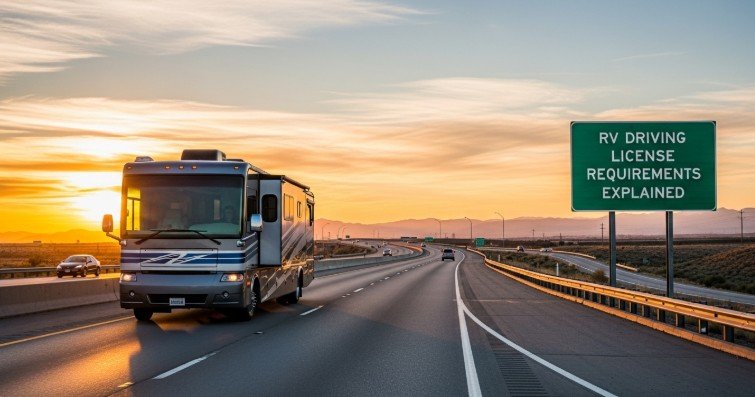
Driving an RV opens the door to freedom, road trips, and full-time travel but one of the most common questions beginners ask is: do you need a special license to drive an RV?
The answer isn’t as complicated as it seems, but there are important legal details you must understand before hitting the road. This guide breaks everything down clearly covering U.S. laws, weight limits, RV types, and how to stay fully compliant so you can focus on enjoying your RV Camping experience with confidence and peace of mind.
Do You Need a Special License to Drive an RV? (Quick Answer)
In most cases, you do NOT need a special license to drive an RV in the United States when it’s used for personal, non-commercial travel.
A standard driver’s license is sufficient for most RVs, including Class A, Class B, and Class C motorhomes.
However, some states require a non-commercial special license if your RV exceeds certain weight limits—typically over 26,000 pounds (GVWR).
Understanding RV License Requirements in the U.S.
Understanding how RV licensing works starts with knowing what factors determine whether a special license is required.
What Determines Whether You Need a Special License?
Several key factors influence licensing requirements:
- Vehicle weight (GVWR – Gross Vehicle Weight Rating)
- RV type (motorhome vs towable trailer)
- State-specific DMV regulations
- Personal vs commercial use
These variables mean that the same RV could require different licensing depending on where you live.
Types of Driver’s Licenses Relevant to RVs
There are three main types of licenses to understand:
- Standard Driver’s License (Class D)
Covers most personal vehicles and typical RVs - Non-Commercial Class B or Class A License
Required in some states for large RVs exceeding weight thresholds - Commercial Driver’s License (CDL)
Only required if the RV is used for commercial purposes (rare for personal owners)
Why Most RV Owners Don’t Need a Special License
Most RV travelers fall into the “no special license needed” category because:
- Personal RV use is not classified as commercial driving
- Many RVs are under the 26,000 lb threshold
- State laws often allow standard licensing for recreational use
Do You Need a Special License to Drive an RV? State-by-State Considerations
States That Require Special Licenses for Large RVs
Some states enforce stricter rules for larger RVs:
- California
- Texas
- Nevada
- New York (in certain weight categories)
In these states, you may need a non-commercial Class A or B license if your RV exceeds weight limits.
States That Do Not Require Special Licenses
The majority of U.S. states allow you to drive most RVs with a standard license, especially if the vehicle is under weight limits.
How to Check Your State’s RV Driving Laws
To stay compliant:
- Visit your state’s DMV website
- Review transportation department guidelines
- Check your vehicle registration and documentation
Laws can change, so always verify before purchasing or traveling.
RV Types and License Requirements Explained
Class A Motorhomes (Large RVs)
These are the largest RVs and may require a special license if they exceed weight limits.
Class B Camper Vans
Compact and easy to drive, these almost never require a special license.
Class C Motorhomes
Mid-sized RVs that typically fall within standard licensing requirements.
Towable RVs (Travel Trailers & Fifth Wheels)
Licensing depends on the combined weight (GCWR) of the towing vehicle and trailer.
Weight Limits and RV Licensing Rules
Understanding GVWR and GCWR
- GVWR (Gross Vehicle Weight Rating): Maximum weight of the RV
- GCWR (Gross Combined Weight Rating): Total weight of RV + trailer
These numbers determine whether you need additional licensing.
Common Weight Thresholds
- Under 26,000 lbs: Standard license is usually sufficient
- Over 26,000 lbs: May require a special non-commercial license
Why Weight Matters for Licensing
Weight affects:
- Vehicle handling and braking
- Road safety risks
- Legal compliance
Heavier RVs require more skill, which is why some states regulate them.
How to Determine If You Need a Special License for an RV
Step 1 – Identify Your RV Type
Determine whether you have a motorhome or a towable RV.
Step 2 – Check the GVWR Rating
Locate this on the RV’s label (usually near the driver’s seat or door panel).
Step 3 – Calculate Combined Weight (if towing)
Add the trailer weight to your towing vehicle’s weight.
Step 4 – Review Your State’s DMV Requirements
Look for non-commercial license rules specific to RVs.
Step 5 – Confirm Personal vs Commercial Use
If you’re using the RV for personal travel, a CDL is usually not required.
Step 6 – Take Additional Tests if Required
Some states require a written or driving test for larger RVs.
H3: Step 7 – Practice Safe Driving Techniques
Even if not required, training improves confidence and safety.
RV License Requirements Comparison Table
| RV Type | Weight Range | License Required | Notes |
|---|---|---|---|
| Class B Camper Van | Under 26,000 lbs | Standard License | Easy to drive |
| Class C Motorhome | Under 26,000 lbs | Standard License | Most common RV |
| Class A Motorhome | Over 26,000 lbs | May require special license | State-dependent |
| Travel Trailer | Varies | Standard or special | Based on combined weight |
| Fifth Wheel | Often heavy | May require special license | Depends on state |
Pros and Cons of RV License Requirements
Advantages of Standard License Access
- Easy entry into RV lifestyle
- No additional testing in most cases
- Beginner-friendly
Challenges of Special Licensing
- Extra paperwork and testing
- State-by-state complexity
- Potential delays in travel plans
Common Mistakes to Avoid When Driving an RV Legally
Ignoring Weight Limits
Many drivers assume their standard license covers all RVs this can lead to legal issues.
Assuming Rules Are the Same in Every State
RV laws vary significantly, especially for larger vehicles.
Not Checking Towing Capacity
Overloading your vehicle can be dangerous and illegal.
Overlooking Insurance and Registration Requirements
Proper documentation is essential for compliance and protection.
People Also Ask (Sub-Questions Section)
Do you need a CDL to drive an RV?
No, not for personal use. A CDL is only required for commercial purposes.
What size RV requires a special license?
Typically, RVs over 26,000 lbs may require a special license depending on the state.
Can you drive a large motorhome with a regular license?
Yes, in many states but not all.
Do RV license rules vary by state?
Yes, and it’s crucial to check your local DMV laws.
Is driving an RV difficult for beginners?
It can be challenging at first, but manageable with practice.
Frequently Asked Questions (FAQs)
Do you need a special license to drive an RV in every state?
No, most states allow standard licenses for typical RVs.
What happens if you drive an RV without the required license?
You may face fines, penalties, or insurance issues.
Are RV license rules different for trailers vs motorhomes?
Yes, especially when combined weight exceeds limits.
Can tourists drive RVs in the U.S. without special licenses?
Generally yes, as long as they meet standard licensing requirements.
Do you need training to drive a large RV?
Not always required, but highly recommended for safety.
How do I upgrade my license for a large RV?
Visit your state DMV and apply for a non-commercial Class A or B license.
Is RV driving considered commercial driving?
No, unless you’re using the RV for business purposes.
Are insurance requirements affected by license type?
Yes, incorrect licensing can impact insurance coverage and claims.
Final Thoughts on Do You Need a Special License to Drive an RV?
Key Takeaways for RV Drivers
- Most RVs do not require a special license
- Weight and state laws are the key deciding factors
- Always verify local DMV requirements before driving
How to Stay Legal and Safe on the Road
To avoid legal issues and ensure a smooth journey:
- Know your RV’s weight and classification
- Follow state-specific regulations
- Practice safe driving and handling techniques
Understanding the licensing rules before you travel ensures not only compliance but also peace of mind on every mile of your RV journey.