Installing a dedicated power source for your RV is one of the most practical upgrades for any RV owner. Whether you’re parking at home, preparing for long trips, or setting up a full-time RV lifestyle, learning how to install RV electrical outlet correctly ensures safe, reliable power without relying on extension cords or unsafe hookups.
This guide walks you through everything from understanding RV power requirements to wiring, safety codes, and installation steps used by professionals. You’ll also see real-world considerations for homeowners in places like Steinhatchee, Florida, where RV setups are common for fishing and seasonal travel, along with insights from Privacy RV, helping you understand safe, reliable RV electrical setups for long-term use.
Short Answer — How to Install RV Electrical Outlet?
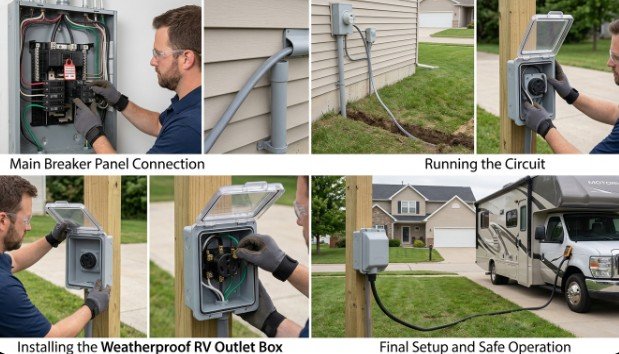
Installing an RV electrical outlet involves running a properly rated circuit from your main electrical panel to a dedicated outdoor or garage outlet (usually 30-amp or 50-amp). This includes installing the correct breaker, wiring, grounding, and a weatherproof outlet box to safely supply power to your RV.
In simple terms:
You connect a dedicated breaker → run correct gauge wiring → install a weatherproof RV outlet → test safely.
What You Need to Know Before Learning How to Install RV Electrical Outlet?
Before touching any wires, it’s important to understand how RV electrical systems actually work.
Understanding RV Power Requirements
- 30-amp RV systems – Common in smaller RVs and campers
- 50-amp RV systems – Used in large RVs with multiple AC units
- Voltage systems – 120V (30A) vs 120/240V split-phase (50A)
Choosing the wrong setup can cause power overloads or damage appliances.
Electrical Safety Requirements
- NEC (National Electrical Code) compliance is essential
- Proper grounding prevents shock hazards
- Outdoor installations must be weatherproof and sealed
- Many regions (including coastal areas like Steinhatchee, Florida) require corrosion-resistant materials due to humidity
Types of RV Electrical Outlets
30-Amp RV Outlet (TT-30R)
- Single 120V power supply
- Designed for smaller RVs
- Lower energy demand systems
- More affordable installation
50-Amp RV Outlet (14-50R)
- Dual 120V / 240V split-phase system
- Powers large RV appliances simultaneously
- Requires heavier wiring and breaker capacity
- Higher installation cost but more flexibility
Portable vs Permanent RV Hookups
- Temporary plug-in adapters for short-term use
- Permanent hardwired outlets for long-term RV parking
- Permanent setups are safer and more efficient
How to Install RV Electrical Outlet?
Step 1 — Turn Off Main Power Supply
- Shut off main breaker completely
- Verify power is off using a voltage tester
Step 2 — Choose Proper Outlet Location
- Near RV parking space or driveway
- Protected from rain and physical damage
- Easy access for plugging/unplugging
Step 3 — Install Correct Circuit Breaker
- 30A double-pole breaker for 30A systems
- 50A double-pole breaker for 50A systems
- Match breaker to RV specifications
Step 4 — Run Electrical Wiring
- Use 10 AWG wire for 30A systems
- Use 6 AWG wire for 50A systems
- Run wiring through protective conduit
Step 5 — Mount RV Electrical Outlet Box
- Install weatherproof outdoor-rated box
- Secure firmly to wall, post, or pedestal
Step 6 — Connect Wires to Outlet
- Connect hot, neutral, and ground wires correctly
- Tighten all terminals securely to prevent arcing
H3: Step 7 — Test the RV Electrical Outlet
- Restore power at breaker panel
- Test with voltage meter or RV plug-in test
Tools and Materials Needed for Installation
Essential Electrical Tools
- Voltage tester
- Wire stripper
- Screwdrivers
- Drill with mounting bits
Required Electrical Components
- RV outlet (30A or 50A)
- Circuit breaker
- Copper wiring
- Weatherproof outlet box
- Electrical conduit and fittings
Safety Guide for RV Electrical Installation
Step 1 — Shut Off Power Before Starting
Never work on live circuits.
Step 2 — Use Proper Wire Gauge and Breaker Size
Incorrect sizing can cause overheating and fire hazards.
Step 3 — Ensure Proper Grounding
Grounding protects your RV and home from electrical faults.
Step 4 — Protect Outdoor Wiring with Conduit
Prevents weather damage and rodent interference.
Step 5 — Follow Local Electrical Codes
Some areas require permits or inspections before installation.
30-Amp vs 50-Amp RV Outlet
| Feature | 30-Amp Outlet | 50-Amp Outlet |
|---|---|---|
| Voltage | 120V | 120/240V |
| Power Capacity | Lower | Higher |
| RV Size | Small to medium RVs | Large RVs |
| Appliances Supported | Limited | Full appliance load |
| Wiring Required | 10 AWG | 6 AWG |
| Cost | Lower | Higher |
Common Mistakes When Installing RV Electrical Outlet
Using Incorrect Wire Size
Can cause overheating and system failure.
Installing Wrong Breaker Type
Breaker must match RV load requirements.
Poor Grounding Connections
Leads to shock risk and equipment damage.
Skipping Weather Protection
Outdoor outlets must be sealed and covered.
Overloading Electrical Panel
Older panels may not support RV circuits.
Sub-Questions People Also Ask About RV Electrical Installation
Can I install an RV outlet myself?
Yes, but only if you understand electrical systems and local codes.
Do I need a permit to install RV electrical outlet?
Often yes, depending on your local building regulations.
What size breaker do I need for an RV outlet?
30A or 50A double-pole breaker depending on RV type.
Can I plug my RV into a regular house outlet?
Only temporarily and with limited power.
How far can an RV outlet be from the panel?
Depends on wire gauge and voltage drop considerations.
Is 30 amp or 50 amp better for RVs?
50 amp offers more power and flexibility for larger RVs.
What happens if I wire RV outlet incorrectly?
It can damage appliances or create serious safety hazards.
Do RV outlets need grounding rods?
Not always, but proper grounding is mandatory.
FAQs About How to Install RV Electrical Outlet?
What is the safest way how to install RV electrical outlet?
Turn off power, use correct wiring, and follow code compliance.
Can I use extension cords instead of installing an RV outlet?
Not recommended for long-term or high-power use.
How long does RV outlet installation take?
Typically 2–6 hours depending on complexity.
What is the cost of installing an RV electrical outlet?
Ranges from $300 to $1,500 including materials and labor.
Can a 50-amp RV plug into a 30-amp outlet?
Yes, but only with an adapter and limited power usage.
Is outdoor RV outlet installation waterproof?
Yes, if proper weatherproof boxes are used.
Do RV outlets require special breakers?
Yes, they require dedicated double-pole breakers.
Can I install RV outlet in my garage?
Yes, if ventilation and code requirements are met.
Conclusion — Safe Approach to How to Install RV Electrical Outlet
Key Takeaways
- Correct breaker and wire size are critical for safety
- 30A vs 50A depends on RV power needs
- Proper grounding and code compliance are essential
Final Thoughts
Installing an RV electrical outlet is a smart upgrade for any RV owner, especially for long-term parking or seasonal travel lifestyles in areas like Steinhatchee, Florida where RV living and outdoor recreation are common. When installed correctly, it ensures safe, reliable power while protecting your RV’s electrical system for years to come.