Boat trailer parking can be a tricky task for many boat owners. With a combination of limited space, legal restrictions, and potential damage to both your trailer and your boat, it’s crucial to plan ahead. Whether you’re parking at a marina, in your driveway, or at a temporary location, understanding how to park your boat trailer properly can save you time, money, and stress. In this article, we’ll discuss the best practices for parking your boat trailer, key considerations, and how to choose the best parking solution for your needs.

Why Proper Boat Trailer Parking is Crucial
Parking a boat trailer isn’t just about finding a free space to leave it. Proper parking ensures the safety of your boat, your trailer, and even other vehicles or property around you. Parking your boat trailer the wrong way can lead to various issues, such as the risk of damage, theft, or even legal violations, depending on where you are.
Protection from Damage
One of the main reasons to prioritize correct boat trailer parking is to prevent unnecessary damage to your equipment. Leaving a trailer in an improper location can expose it to hazards such as:
- Collision with other vehicles or obstacles
- Weather exposure, such as sun, rain, or extreme temperatures, which can cause deterioration of both the trailer and the boat
- Theft of accessories, like boat covers, motors, or other valuable gear stored on the trailer
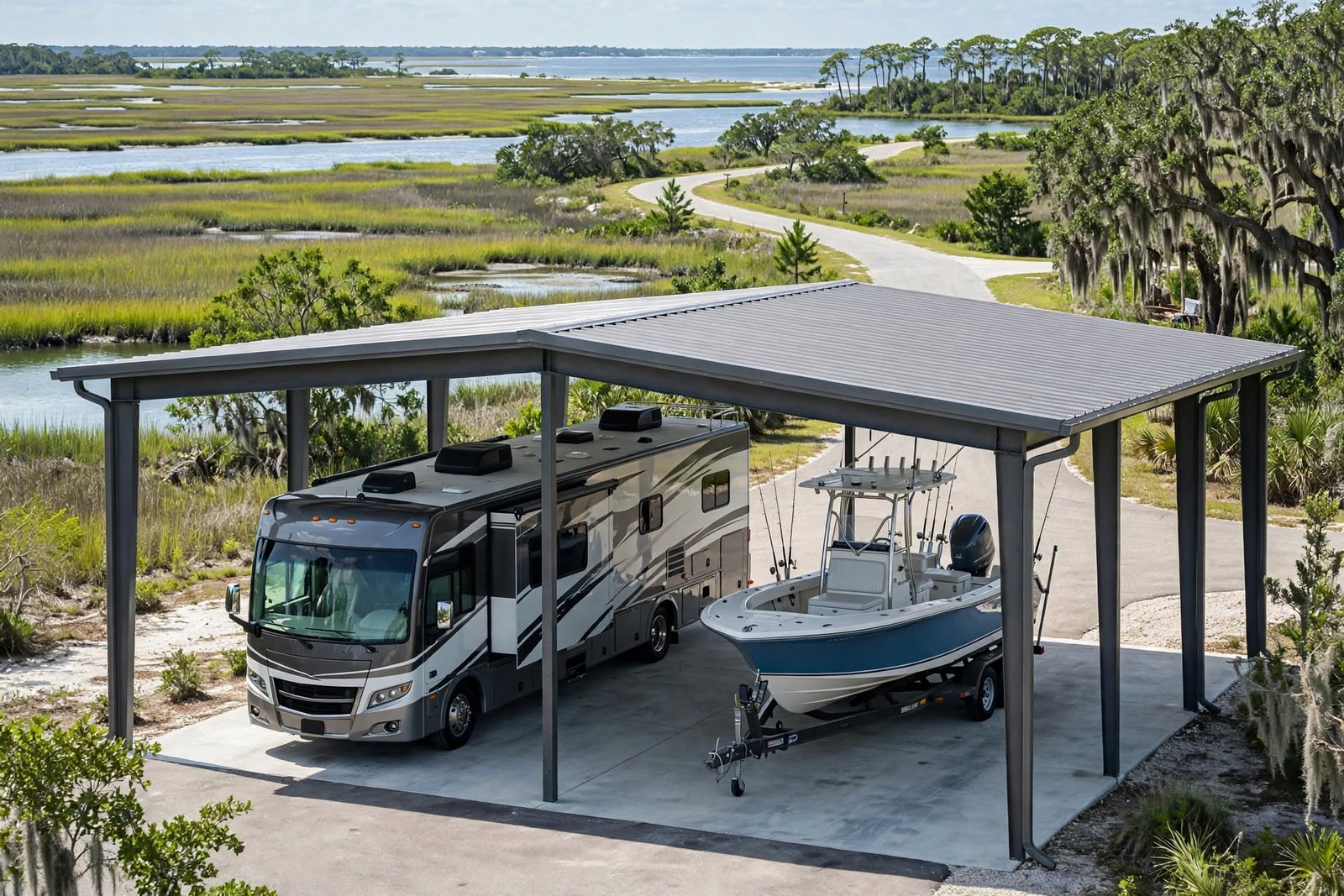
Using a designated parking spot for boat trailers, whether at home or a marina, will help avoid these risks and keep both your boat and trailer in top condition.
Legal Considerations for Parking Boat Trailers
In many places, parking a boat trailer in certain areas, such as streets or public spaces, can be subject to local regulations. Depending on the area, you might be required to park your boat trailer in a specific spot or face fines. This is particularly true in residential areas, where zoning laws may restrict trailer parking in front of homes or in driveways.
Be sure to:
- Check local ordinances and HOA regulations before parking your boat trailer.
- Obtain any necessary permits if you plan to park your boat trailer in a public parking area
Space Availability and Maneuvering
Another key aspect of boat trailer parking is ensuring you have enough space to maneuver the trailer into place. It’s easy to underestimate the amount of space needed to park a boat trailer safely, especially if you’re not experienced with towing. The width and length of your trailer, along with its turning radius, are factors to consider when choosing a parking spot.
Tip: If you’re parking at home, consider the size of your driveway or yard. If there isn’t enough space to park and maneuver your trailer easily, you may need to look into off-site storage options or parking spaces.
Recommended Boat Trailer Parking Solutions
- Home Driveway: If you have a large driveway, parking your boat trailer at home might be the easiest solution. Ensure you have sufficient space to park and turn your trailer. A gravel or paved driveway will make this process easier.
- Marina or Storage Facility: Many marinas offer boat trailer parking for boat owners, either on-site or at a nearby storage facility. These locations are often secure and designed specifically for storing trailers.
- Commercial Storage Lots: Some commercial storage facilities offer long-term or short-term boat trailer parking. These facilities typically offer more space, security, and protection from the elements than parking in your driveway.
For more information on parking solutions for boat owners, check out Privacy RV, a trusted provider in trailer parking and storage.
Top Tips for Safe and Efficient Boat Trailer Parking
1. Choose the Right Parking Spot
Choosing the right location is essential. Consider the space, the distance to the water, and the ease of maneuvering your trailer. If you’re parking at a marina, ensure the location is close enough to the dock but far enough to avoid congestion.
Tip: If you’re parking at a commercial lot, ensure the facility is well-maintained and has a secure perimeter to prevent theft or vandalism.
2. Use Proper Towing Techniques
When parking a boat trailer, it’s important to use proper towing and parking techniques. Start by aligning the trailer with your intended parking spot. Take your time when reversing the trailer to avoid unnecessary damage to both the boat and the trailer. Utilize a spotter if possible to guide you into the space.
Tip: Make sure your vehicle is in good condition and has a proper towing setup, including a weight distribution hitch if needed. This ensures safe towing and parking.
3. Secure Your Trailer and Boat
Once you’ve parked your boat trailer, securing it properly is crucial. Always use wheel locks, trailer locks, or hitch locks to prevent theft. Additionally, if your boat is left on the trailer for an extended period, consider investing in a boat cover to protect it from the elements.
4. Consider Seasonal Storage Options
If you don’t need to use your boat regularly, seasonal storage options can be a great choice. Storing your boat trailer at a marina or secure storage lot during off-seasons will not only protect your equipment but will also free up valuable space in your driveway.
Conclusion: Simplify Boat Trailer Parking with Smart Solutions
Proper boat trailer parking is essential for maintaining the longevity of your equipment and complying with local laws. By following these tips and considering the right parking solutions, you can ensure the safety of your boat, trailer, and other property.