RV living has exploded in popularity thanks to rising housing costs, remote work flexibility, and the appeal of a minimalist lifestyle. But before hitting the road, one question matters more than anything else: how much does living in an RV cost?
The answer isn’t one-size-fits-all. Your monthly expenses can vary dramatically based on how you travel, where you stay, and how you live. This guide breaks it all down with real numbers, practical examples, and a clear system to estimate your own costs.
Short Answer — How Much Does Living in an RV Cost?
- Average monthly cost: $800 – $3,500+
- Budget RV living: $800 – $1,500/month
- Mid-range lifestyle: $1,500 – $2,500/month
- Luxury RV living: $2,500 – $4,000+/month
Biggest cost drivers:
- Campground fees
- Fuel and travel frequency
- RV type and financing
- Lifestyle habits (food, entertainment, internet)
RV living can be cheaper than traditional housing, but only if you manage your travel and spending habits carefully.
What Determines the Cost of Living in an RV?
RV Type (Class A, B, C, Travel Trailer, Fifth Wheel)
Larger RVs (like Class A motorhomes) consume more fuel and cost more to maintain. Smaller rigs or trailers are significantly cheaper to operate.
Travel Style (Stationary vs Full-Time Travel)
Staying in one place for weeks or months drastically reduces fuel costs. Constant movement increases expenses quickly.
Campground Choices (Free vs Paid Parks)
- Free camping (boondocking): $0
- State parks: $20–$50/night
- RV resorts: $60–$150+/night
Monthly rates can reduce costs significantly.
Fuel Prices and Driving Frequency
Fuel is one of the most volatile expenses. Driving long distances regularly can double your monthly budget.
Lifestyle Habits (Eating Out, Entertainment, Internet)
Dining out, subscriptions, and premium internet (like Starlink) can push costs higher than expected.
Full Breakdown of RV Living Costs (Monthly & Annual)
Fixed Costs
These remain relatively consistent each month:
- RV payment or depreciation
- Insurance ($50–$300/month)
- Registration and taxes
Variable Costs
These fluctuate depending on your lifestyle:
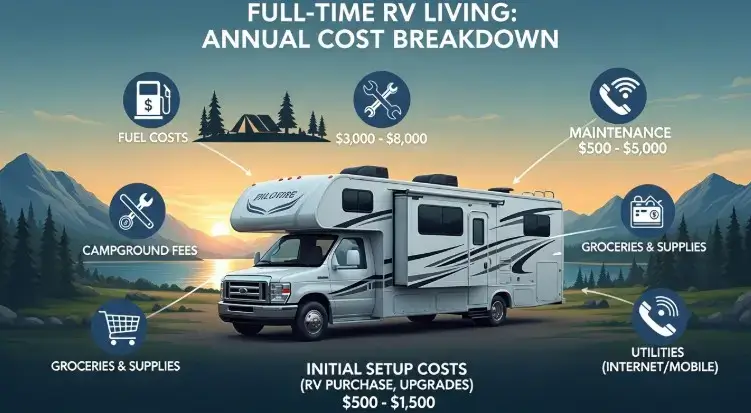
- Campground fees: $0 – $1,500+
- Fuel: $100 – $1,000+
- Food and groceries: $300 – $1,500
- Maintenance and repairs: $50 – $800
Hidden Costs Most People Ignore
- Dump station fees
- Propane for heating/cooking
- Laundry
- Internet (Starlink or mobile data plans)
These “small” costs often add $200–$500/month.
How much does living in an rv cost? (Real-Life Scenarios)
how much does living in an rv cost? for budget travelers
- Boondocking most of the time
- Minimal driving
Estimated monthly cost:
- Campgrounds: $0–$200
- Fuel: $100–$200
- Food: $300–$500
- Total: $800–$1,200
how much does living in an rv cost? for average full-timers
- Mix of free and paid camping
- Moderate travel
Estimated monthly cost:
- Campgrounds: $500–$900
- Fuel: $300–$600
- Food: $500–$800
- Total: $1,500–$2,500
how much does living in an rv cost? for luxury rv living
- RV resorts and premium locations
- Frequent travel
Estimated monthly cost:
- Campgrounds: $1,000–$2,000+
- Fuel: $700–$1,200
- Food: $800–$1,500
- Total: $2,500–$4,000+
How to Calculate Your RV Living Costs
Step 1 – Choose Your RV Type and Payment Plan
Decide whether you’ll finance or buy outright. Monthly payments can range from $200 to $1,500+.
Step 2 – Estimate Monthly Campground Costs
Determine how often you’ll stay in paid parks vs free locations.
Step 3 – Calculate Fuel Based on Travel Distance
Estimate miles per month and divide by your RV’s MPG.
Step 4 – Add Food, Utilities, and Daily Living Expenses
Include groceries, dining out, propane, and entertainment.
Step 5 – Include Maintenance and Emergency Fund
Set aside at least $100–$300/month for unexpected repairs.
Step 6 – Factor in Internet and Connectivity Costs
Reliable internet is essential for remote work, budget accordingly.
Step 7 – Adjust Based on Lifestyle Goals
Want to travel more? Expect higher fuel costs. Prefer staying put? You’ll save significantly.
RV Living Cost Comparison Table (Budget vs Mid vs Luxury)
| Expense Category | Budget RV Living | Mid-Range RV Living | Luxury RV Living |
| Campground Fees | $0 – $500 | $500 – $1,000 | $1,000 – $2,000+ |
| Fuel | $100 – $300 | $300 – $700 | $700 – $1,200+ |
| Food | $300 – $600 | $500 – $900 | $800 – $1,500+ |
| Insurance | $50 – $150 | $100 – $200 | $150 – $300 |
| Maintenance | $50 – $200 | $100 – $300 | $300 – $800 |
| Internet | $50 – $150 | $100 – $250 | $200 – $500 |
| Total Monthly | $800 – $1,500 | $1,500 – $2,500 | $2,500 – $4,000+ |
Is Living in an RV Cheaper Than a House or Apartment?
RV Living vs Apartment Costs
Apartments often cost $1,500–$3,000/month plus utilities. RV living can be cheaper—but only with disciplined budgeting.
RV Living vs Homeownership Costs
Homeownership includes mortgage, taxes, insurance, and maintenance. RV living removes many of these, but adds fuel and campground fees.
When RV Living Saves Money (and When It Doesn’t)
- Saves money: stationary living, free camping, minimal travel
- Costs more: constant movement, luxury parks, high fuel usage
Ways to Reduce the Cost of Living in an RV
Boondocking and Free Camping Strategies
Use public lands (BLM, national forests) to eliminate campground fees.
Monthly Campground Discounts and Memberships
Programs like Thousand Trails or KOA monthly rates can cut costs.
Driving Less to Save Fuel
Travel slower and stay longer in each location.
Cooking Instead of Eating Out
One of the easiest ways to save hundreds monthly.
DIY Maintenance and Repairs
Learning basic repairs prevents expensive service bills.
Common Mistakes That Increase RV Living Costs
Moving Too Frequently
Fuel costs skyrocket when you travel constantly.
Choosing Expensive RV Parks Only
Luxury parks can double your monthly expenses.
Ignoring Maintenance (Leads to Big Repairs)
Small issues become costly if neglected.
Underestimating Fuel Costs
Many new RVers overlook MPG realities.
Overspending on Upgrades and Gear
You don’t need every gadget, keep it simple.
One-Time Costs of Starting RV Living
Buying an RV (New vs Used)
- Used RV: $10,000–$60,000
- New RV: $60,000–$200,000+
Initial Setup Costs (Solar, Gear, Essentials)
Solar systems, hoses, leveling blocks, and tools can cost $1,000–$5,000.
Registration, Taxes, and Insurance Setup
Initial fees vary by state but can be significant.
Emergency Fund Recommendations
At least $3,000–$10,000 for unexpected repairs.
Pros and Cons of RV Living (Financial Perspective)
Financial Advantages
- Lower housing costs
- Flexibility and mobility
- Minimal utility bills
Financial Drawbacks
- Fuel volatility
- Maintenance unpredictability
- Campground expenses
FAQs — how much does living in an rv cost?
Is it cheaper to live in an RV full-time?
It can be, but only if you control travel, campground choices, and daily spending.
How much does living in an RV cost per month on average?
Most full-time RVers spend between $1,500 and $2,500 monthly.
Can you live in an RV for $1000 a month?
Yes, with boondocking, minimal travel, and strict budgeting.
What is the biggest expense in RV living?
Campground fees and fuel are typically the largest costs.
Do RV parks charge monthly or nightly?
Both, monthly rates are significantly cheaper.
How much does fuel cost for RV travel?
Anywhere from $100 to $1,200+ depending on distance and RV type.
Is RV insurance expensive?
It’s usually cheaper than home insurance, ranging from $50–$300/month.
Do you pay utilities when living in an RV?
Sometimes included in campground fees, but propane and electricity may cost extra.
Final Thoughts: Is RV Living Worth the Cost?
Understanding how much does living in an rv cost comes down to one key truth: it’s entirely lifestyle-driven.
- You can live cheaply with smart choices, or spend more than traditional housing
- The biggest savings come from reducing travel and campground costs
- Financial success in RV living depends on discipline, planning, and flexibility
The cost estimates mentioned in this guide are based on industry averages, real-world RV living experiences, and publicly available data. These prices are not official figures from Privacy RV and may vary depending on location, fuel prices, RV type, and individual lifestyle choices.