Living in an RV during winter can be incredibly rewarding, but freezing temperatures can quickly turn that experience into a costly nightmare. From burst pipes to dead batteries, cold weather doesn’t just make things uncomfortable, it can cause serious damage.
The good news? With the right strategies, you can safely live in your RV even in sub-zero conditions. This guide breaks down exactly how to keep your RV from freezing while living in it, using proven methods that full-time RVers rely on in extreme climates.
Short Answer — How to Keep RV From Freezing While Living in It?
To prevent your RV from freezing while living in it:
- Insulate all exposed areas (windows, floors, underbelly)
- Use a reliable heat source (furnace + space heaters)
- Protect water systems (heated hoses, tank heaters)
- Seal air leaks and drafts
- Maintain a consistent interior temperature (above 50°F minimum)
- Monitor humidity to prevent condensation and ice buildup
These steps work best when combined, not individually.
Why RVs Freeze So Easily in Cold Weather
Thin Walls and Poor Insulation Compared to Houses
Unlike traditional homes, RVs are built with lightweight materials. Insulation is minimal, making it easy for heat to escape and cold air to enter.
Exposure to Wind Chill and Ground Cold
RVs are elevated and exposed on all sides. Cold air circulates underneath, pulling heat away from the floor and freezing tanks.
Vulnerable Plumbing Systems and Tanks
Water lines often run along exterior walls or underneath the RV, making them extremely susceptible to freezing.
Common Freezing Points Inside an RV
- Water hoses and inlet connections
- Under-sink plumbing
- Exterior storage compartments
- Tanks and valves
Essential Systems at Risk When an RV Freezes
Fresh Water Lines and Hoses
These freeze first. Once frozen, pressure builds and can cause pipes to burst.
Grey and Black Tanks
Frozen waste tanks can crack and become unusable, one of the most expensive repairs.
Batteries and Electrical Systems
Cold temperatures reduce battery efficiency and lifespan. In extreme cold, batteries can fail completely.
Propane System Performance in Freezing Temperatures
Propane becomes less efficient in very low temperatures, affecting your furnace performance.
How to Keep RV From Freezing While Living in it? (Complete Breakdown)
how to keep rv from freezing while living in it? using insulation strategies
Insulation is your first line of defense.
- Reflectix for windows: Reflects heat back inside and blocks cold air
- Foam board skirting: Installed around the RV base to trap heat underneath
- Thermal curtains: Reduce heat loss through windows
Pro tip: Skirting alone can raise under-RV temperatures by 10–20°F.
How to Keep RV From Freezing while Living in it? with Heating Solutions
Heating keeps everything functional.
- Built-in furnace: Best for heating entire RV and protecting underbelly
- Electric space heaters: Great for reducing propane usage
- Heat distribution tips: Use fans to circulate warm air evenly
Never rely on a single heat source, redundancy is key.
How to Keep RV from Freezing while living in it? by Protecting Plumbing
Plumbing failures are the #1 winter RV problem.
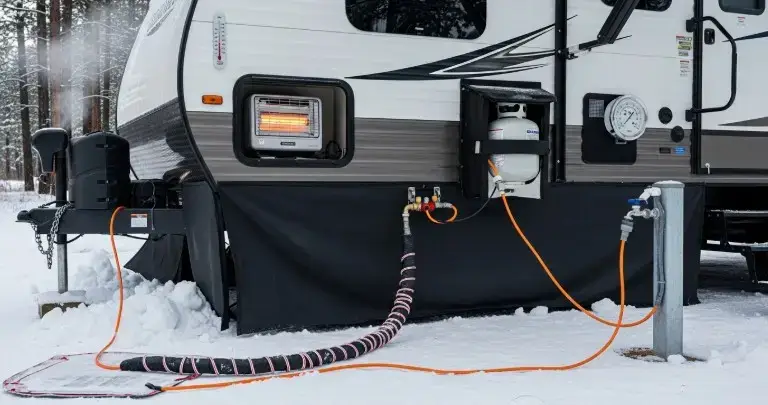
- Heated water hose: Prevents supply line freezing
- Tank heating pads: Keep tanks above freezing
- Drip strategy: Let faucets drip slightly during extreme cold
Winterizing an RV for Full-Time Living
Step 1 – Install RV Skirting to Trap Heat
Use vinyl or foam board skirting to block cold air under your RV.
Step 2 – Insulate Windows, Doors, and Roof Vents
Apply Reflectix, thermal curtains, and vent cushions.
Step 3 – Upgrade Heating System for Sub-Zero Temps
Combine furnace heating with electric heaters for efficiency.
Step 4 – Protect Water Supply Lines and Tanks
Install heated hoses and tank heaters to prevent freezing.
Step 5 – Seal All Air Leaks and Draft Points
Check every seam, especially around slide-outs and entry points.
Step 6 – Add Temperature Monitoring Systems
Use wireless thermometers to monitor underbelly and interior temps.
Step 7 – Manage Condensation and Moisture
Use a dehumidifier and proper ventilation to prevent ice buildup.
Best Methods to Prevent RV Freezing (Comparison Table)
| Method | Effectiveness | Cost | Difficulty | Best For |
| RV Skirting | Very High | Medium | Medium | Extreme cold climates |
| Heated Water Hose | High | Medium | Easy | Preventing pipe freeze |
| Space Heaters | Medium-High | Low | Easy | Interior warmth |
| Tank Heating Pads | High | Medium | Medium | Plumbing protection |
| Window Insulation Film | Medium | Low | Easy | Heat retention |
| Foam Board Insulation | High | Low-Medium | Medium | Underbelly protection |
Pro Tips for Living in an RV During Freezing Weather
Keep Cabinet Doors Open to Circulate Warm Air
This allows heat to reach hidden pipes.
Use Rugs and Carpets to Reduce Floor Cold
Floors lose heat quickly, cover them to improve insulation.
Cook Indoors Strategically to Add Heat
Cooking generates heat and reduces furnace usage.
Park Smart — Sun Exposure and Wind Blocking
Face your RV toward the sun and park near wind barriers.
Always Keep a Backup Heat Source
A secondary heater can save you in emergencies.
Common Mistakes That Cause RVs to Freeze
Relying Only on One Heat Source
If it fails, your entire system is at risk.
Ignoring Underbelly Insulation
Most freezing issues start underneath the RV.
Leaving Tanks and Hoses Unprotected
Even one exposed pipe can freeze your entire system.
Poor Ventilation Leading to Ice Build-Up
Condensation turns into ice, damaging walls and ceilings.
Turning Heat Off Overnight
Temperatures drop fastest at night, never turn heat off completely.
How Cold Is Too Cold for RV Living?
Temperature Thresholds (32°F, 20°F, 0°F and Below)
- 32°F (0°C): Initial freezing risk
- 20°F (-6°C): Pipes freeze quickly without protection
- 0°F (-18°C): High risk of system failure
What Happens at Each Temperature Level
The lower the temperature, the faster heat escapes and systems freeze.
When You Must Take Emergency Measures
Below 0°F, you need full insulation, continuous heating, and active monitoring.
Budget vs Premium Setup for Preventing RV Freezing
Low-Budget Setup (Under $200)
- DIY skirting
- Basic space heater
- Window insulation film
Mid-Range Setup ($200–$800)
- Heated water hose
- Better insulation materials
- Multiple heaters
Full Winter-Proof Setup ($1000+)
- Professional skirting
- Tank heating system
- Smart temperature monitoring
FAQs — How to Keep RV From Freezing While Living in It?
Can you live in an RV in freezing temperatures?
Yes, with proper insulation, heating, and plumbing protection, full-time winter RV living is completely possible.
Will RV pipes freeze overnight?
Yes, especially if temperatures drop below 32°F and no precautions are taken.
Do I need a heated water hose?
If you’re connected to an external water source in winter, it’s essential.
How do I keep my RV tanks from freezing?
Use tank heating pads and keep internal heat running consistently.
Is propane or electric heat better for winter RV living?
A combination works best, propane for primary heat, electric for support.
Should I leave faucets dripping in an RV?
Yes, during extreme cold, a slow drip can prevent pressure buildup and freezing.
How do I insulate RV windows cheaply?
Use Reflectix or plastic insulation film for a budget-friendly solution.
What temperature should I keep my RV at night?
At least 50–55°F to prevent freezing inside walls and plumbing.
Final Thoughts: Mastering Winter RV Living Without Freezing
Successfully learning how to keep rv from freezing while living in it comes down to one principle: layered protection.
- Insulation keeps heat in
- Heating systems generate warmth
- Monitoring ensures nothing fails
Relying on just one method is risky. But combining insulation, heating, plumbing protection, and smart habits, like those recommended by Privacy RV creates a system that can withstand even extreme winter conditions.
If done correctly, winter RV living isn’t just possible, it can be comfortable, efficient, and surprisingly enjoyable.